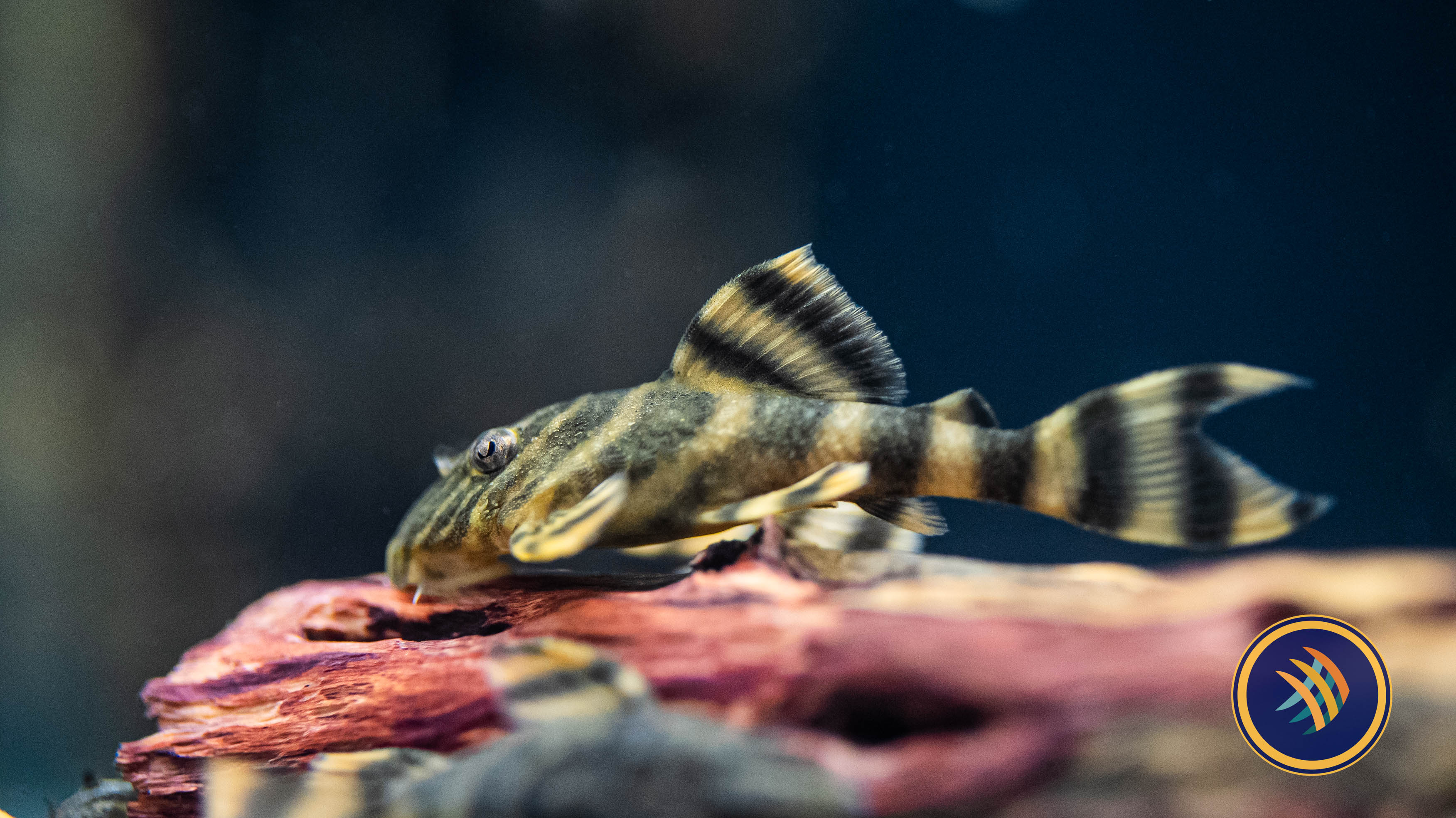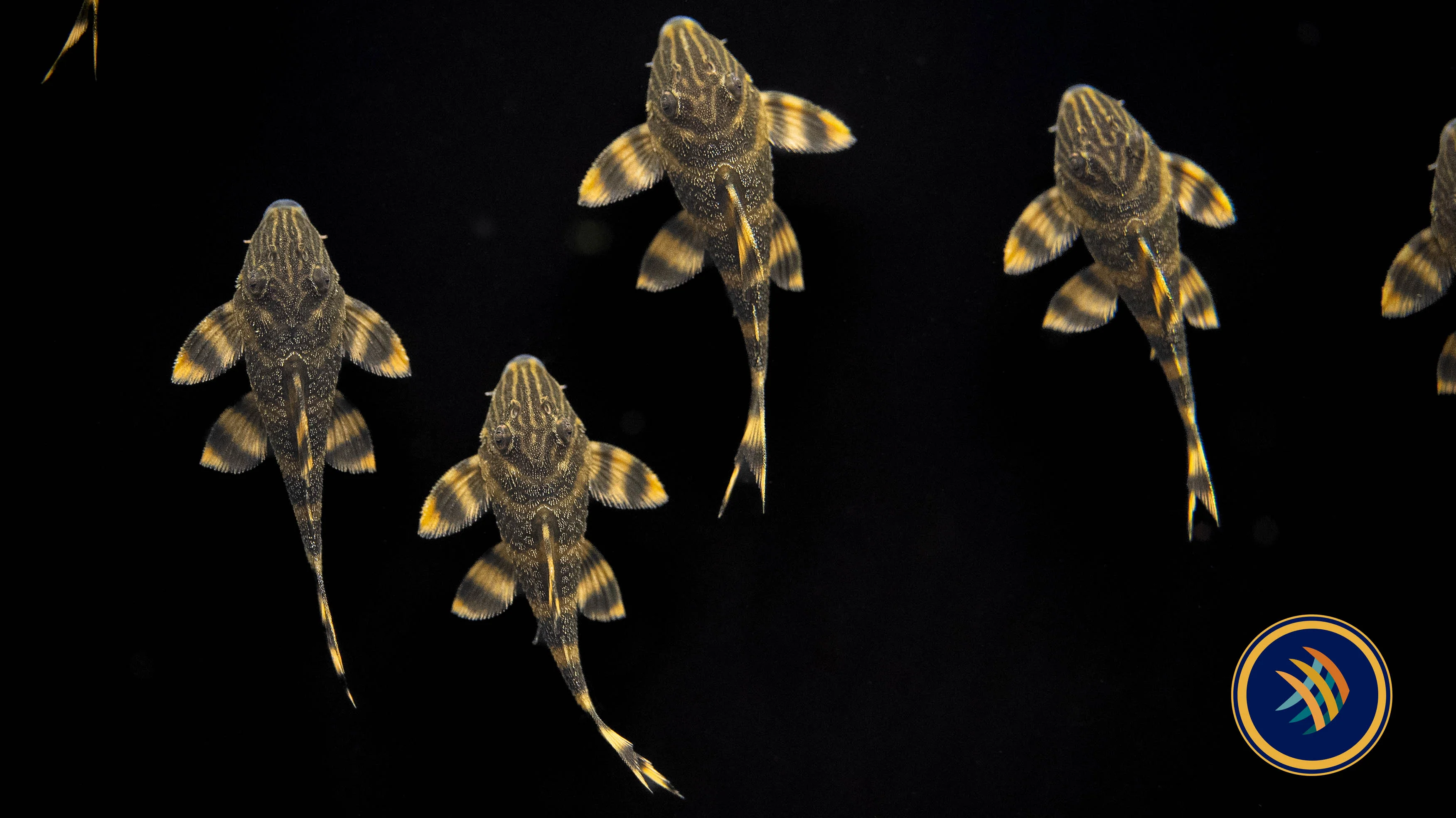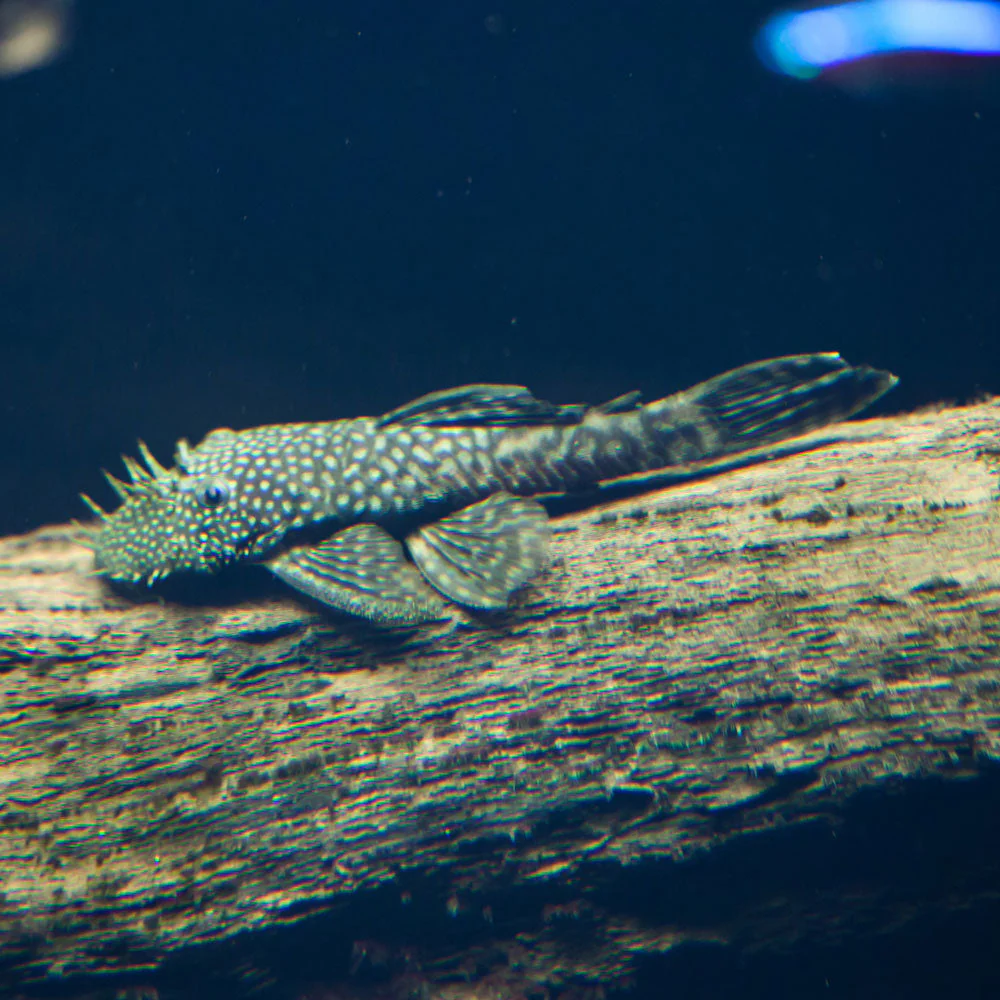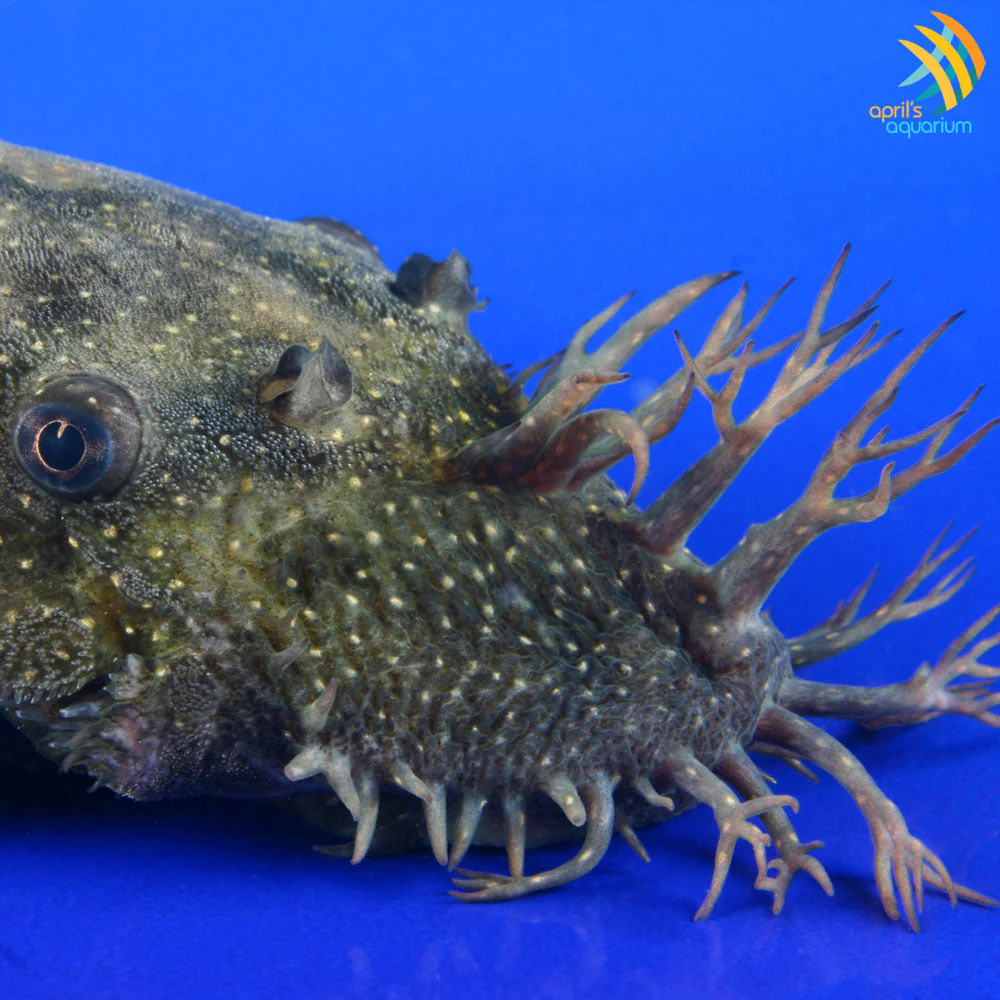
Tiger Stone Loach (Sundoreonectes obesus) 3-5cm
Sundoreonectes obesus is a small freshwater stone loach species native to Borneo (Southeast Asia).
Taxonomy
- Phylum: Chordata
- Class: Actinopterygii (ray-finned fishes)
- Order: Cypriniformes
- Family: Nemacheilidae (brook/stone loaches)
- Genus: Sundoreonectes
- Species: Sundoreonectes obesus (Vaillant, 1902)
Distribution & Habitat
- Geographic range: Endemic to Borneo, particularly Indonesian Kalimantan
- Habitat: Clear, fast‑flowing streams and rivers with rocky or gravel substrates
- Ecology: Demersal (bottom‑dwelling), rheophilic (adapted to strong currents)
These streams are typically well‑oxygenated, cool to warm tropical waters.
Physical Description
- Maximum size: ~10 cm total length
- Body shape: Short, robust, slightly flattened (the name obesus means “stout” or “fat”)
- Coloration: Brown to grey with darker bars or mottling, providing camouflage among stones
- Mouth: Inferior with specialized lips for grazing and clinging to substrates
The body form and fin placement help the fish maintain position in swift currents.
Diet
- Feeds on:
- Small aquatic invertebrates
- Algae and biofilm
- Organic detritus
It functions as a benthic grazer and micro‑predator, contributing to stream ecosystem balance.
Aquarium Notes
- Occasionally kept by specialist aquarists
- Requires:
- Strong water flow
- High oxygenation
- Pristine water quality
- Smooth stones and hiding places
$14.61
Tiger Stone Loach (Sundoreonectes obesus) 3-5cm—
$14.61
Product Information
Product Information
Shipping & Returns
Shipping & Returns
Description
Sundoreonectes obesus is a small freshwater stone loach species native to Borneo (Southeast Asia).
Taxonomy
- Phylum: Chordata
- Class: Actinopterygii (ray-finned fishes)
- Order: Cypriniformes
- Family: Nemacheilidae (brook/stone loaches)
- Genus: Sundoreonectes
- Species: Sundoreonectes obesus (Vaillant, 1902)
Distribution & Habitat
- Geographic range: Endemic to Borneo, particularly Indonesian Kalimantan
- Habitat: Clear, fast‑flowing streams and rivers with rocky or gravel substrates
- Ecology: Demersal (bottom‑dwelling), rheophilic (adapted to strong currents)
These streams are typically well‑oxygenated, cool to warm tropical waters.
Physical Description
- Maximum size: ~10 cm total length
- Body shape: Short, robust, slightly flattened (the name obesus means “stout” or “fat”)
- Coloration: Brown to grey with darker bars or mottling, providing camouflage among stones
- Mouth: Inferior with specialized lips for grazing and clinging to substrates
The body form and fin placement help the fish maintain position in swift currents.
Diet
- Feeds on:
- Small aquatic invertebrates
- Algae and biofilm
- Organic detritus
It functions as a benthic grazer and micro‑predator, contributing to stream ecosystem balance.
Aquarium Notes
- Occasionally kept by specialist aquarists
- Requires:
- Strong water flow
- High oxygenation
- Pristine water quality
- Smooth stones and hiding places