

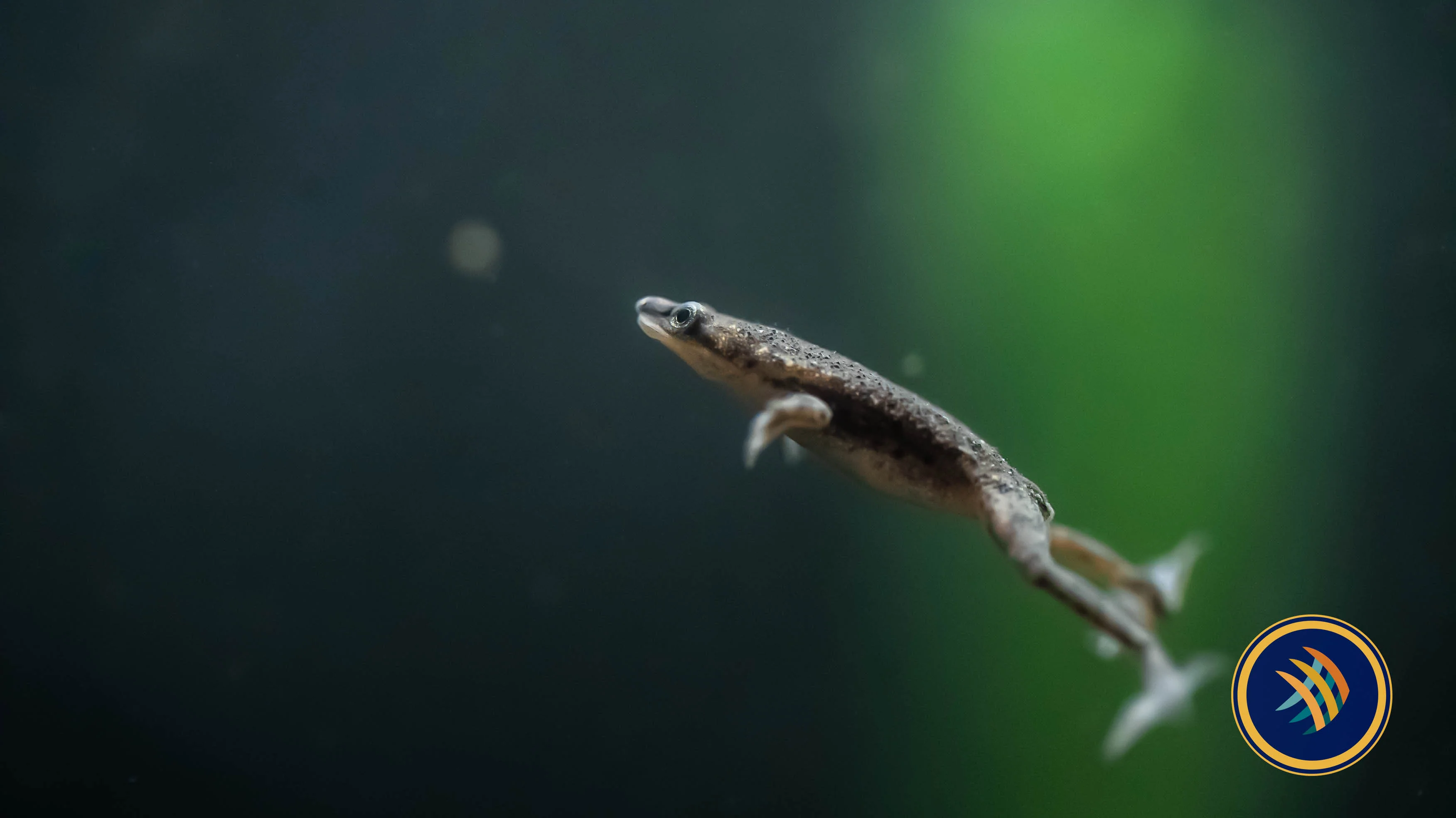
African Dwarf Frog (Hymenochirus boettgeri)
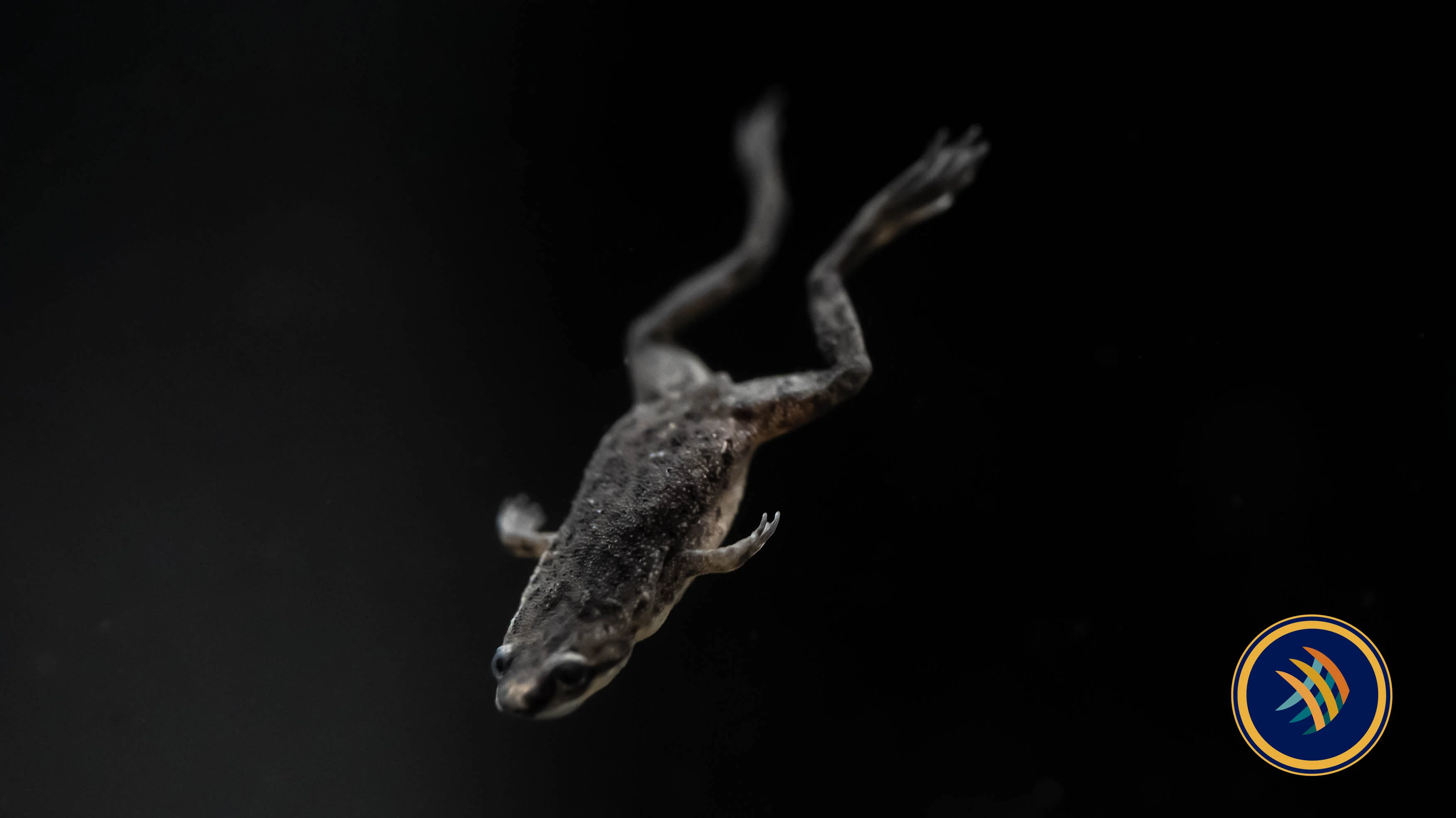
African Dwarf Frog (Hymenochirus boettgeri) is a fully aquatic amphibian native to tropical Central Africa. It's a popular choice for freshwater aquariums due to its peaceful nature, unique behaviors, and compatibility with small fish.
Description
- Size: Adults reach 5–7 cm (2–2.5 inches)
- Color: Olive green to brown with black spots
- Lifespan: Typically 5–8 years, with some living over 10 years
-
Behavior:
- Peaceful but predatory—will eat anything that fits in their mouth.
- Often seen floating motionless at the surface (“burbling”) or darting up for air.
- Nocturnal and social—prefer to be kept in groups
-
Unique Traits:
- No gills—must surface for air.
- Poor eyesight—rely on smell and water vibrations.
- Possess a lateral line system like fish to detect movement
Tank Setup
- Tank Size: Minimum 5 gallons for a pair; 10 gallons for 3–5 frogs
- Water Depth: No more than 20 inches to prevent drowning
- Temperature: 72–78°F (22–26°C)
- pH: 6.5–7.5
- GH: 5–20
- KH: 4–12
- Filtration: Gentle flow; avoid strong currents.
- Cover: Secure lid—frogs are excellent jumpers and escape artists
Diet
- Type: Carnivorous scavengers
- Feeding Style: Bottom feeders; slow and clumsy eaters
-
Recommended Foods:
- Sinking pellets (formulated for predatory fish)
- Live/frozen: brine shrimp, bloodworms, blackworms, tubifex
- Occasional raw meats (e.g., tuna, salmon) and daphnia
-
Feeding Frequency:
- Adults: Every other day or 2–3 times per week
- Juveniles: Daily or 4–6 times per week
-
Tips:
- Use feeding dishes or syringes to target-feed in community tanks.
- Remove uneaten food within 30–60 minutes to maintain water quality
Breeding
- Difficulty: Medium to difficult
- Behavior: Males may “sing” (buzzing/humming) to attract mates
- Setup: Separate breeding tank with soft substrate and gentle filtration.
Health & Safety
- Molting: Shed skin every 2–3 weeks; frogs may eat their shed skin.
- Diseases: Watch for bloating, excessive shedding, or skin discoloration.
- Chytrid Fungus: A global threat to amphibians—buy only from reputable breeders
$2.30
Original: $6.57
-65%African Dwarf Frog (Hymenochirus boettgeri)—
$6.57
$2.30Product Information
Product Information
Shipping & Returns
Shipping & Returns
Description
African Dwarf Frog (Hymenochirus boettgeri) is a fully aquatic amphibian native to tropical Central Africa. It's a popular choice for freshwater aquariums due to its peaceful nature, unique behaviors, and compatibility with small fish.
Description
- Size: Adults reach 5–7 cm (2–2.5 inches)
- Color: Olive green to brown with black spots
- Lifespan: Typically 5–8 years, with some living over 10 years
-
Behavior:
- Peaceful but predatory—will eat anything that fits in their mouth.
- Often seen floating motionless at the surface (“burbling”) or darting up for air.
- Nocturnal and social—prefer to be kept in groups
-
Unique Traits:
- No gills—must surface for air.
- Poor eyesight—rely on smell and water vibrations.
- Possess a lateral line system like fish to detect movement
Tank Setup
- Tank Size: Minimum 5 gallons for a pair; 10 gallons for 3–5 frogs
- Water Depth: No more than 20 inches to prevent drowning
- Temperature: 72–78°F (22–26°C)
- pH: 6.5–7.5
- GH: 5–20
- KH: 4–12
- Filtration: Gentle flow; avoid strong currents.
- Cover: Secure lid—frogs are excellent jumpers and escape artists
Diet
- Type: Carnivorous scavengers
- Feeding Style: Bottom feeders; slow and clumsy eaters
-
Recommended Foods:
- Sinking pellets (formulated for predatory fish)
- Live/frozen: brine shrimp, bloodworms, blackworms, tubifex
- Occasional raw meats (e.g., tuna, salmon) and daphnia
-
Feeding Frequency:
- Adults: Every other day or 2–3 times per week
- Juveniles: Daily or 4–6 times per week
-
Tips:
- Use feeding dishes or syringes to target-feed in community tanks.
- Remove uneaten food within 30–60 minutes to maintain water quality
Breeding
- Difficulty: Medium to difficult
- Behavior: Males may “sing” (buzzing/humming) to attract mates
- Setup: Separate breeding tank with soft substrate and gentle filtration.
Health & Safety
- Molting: Shed skin every 2–3 weeks; frogs may eat their shed skin.
- Diseases: Watch for bloating, excessive shedding, or skin discoloration.
- Chytrid Fungus: A global threat to amphibians—buy only from reputable breeders