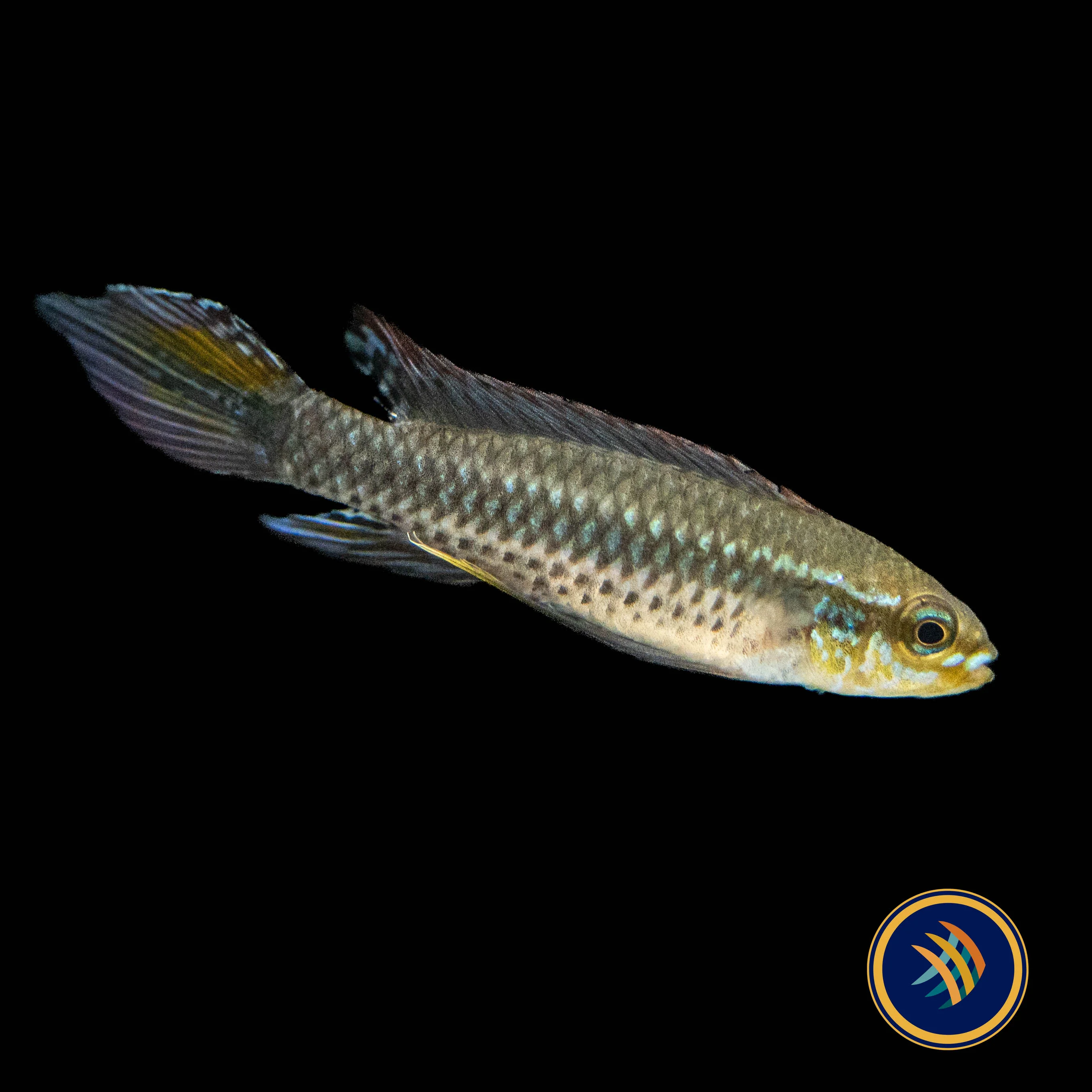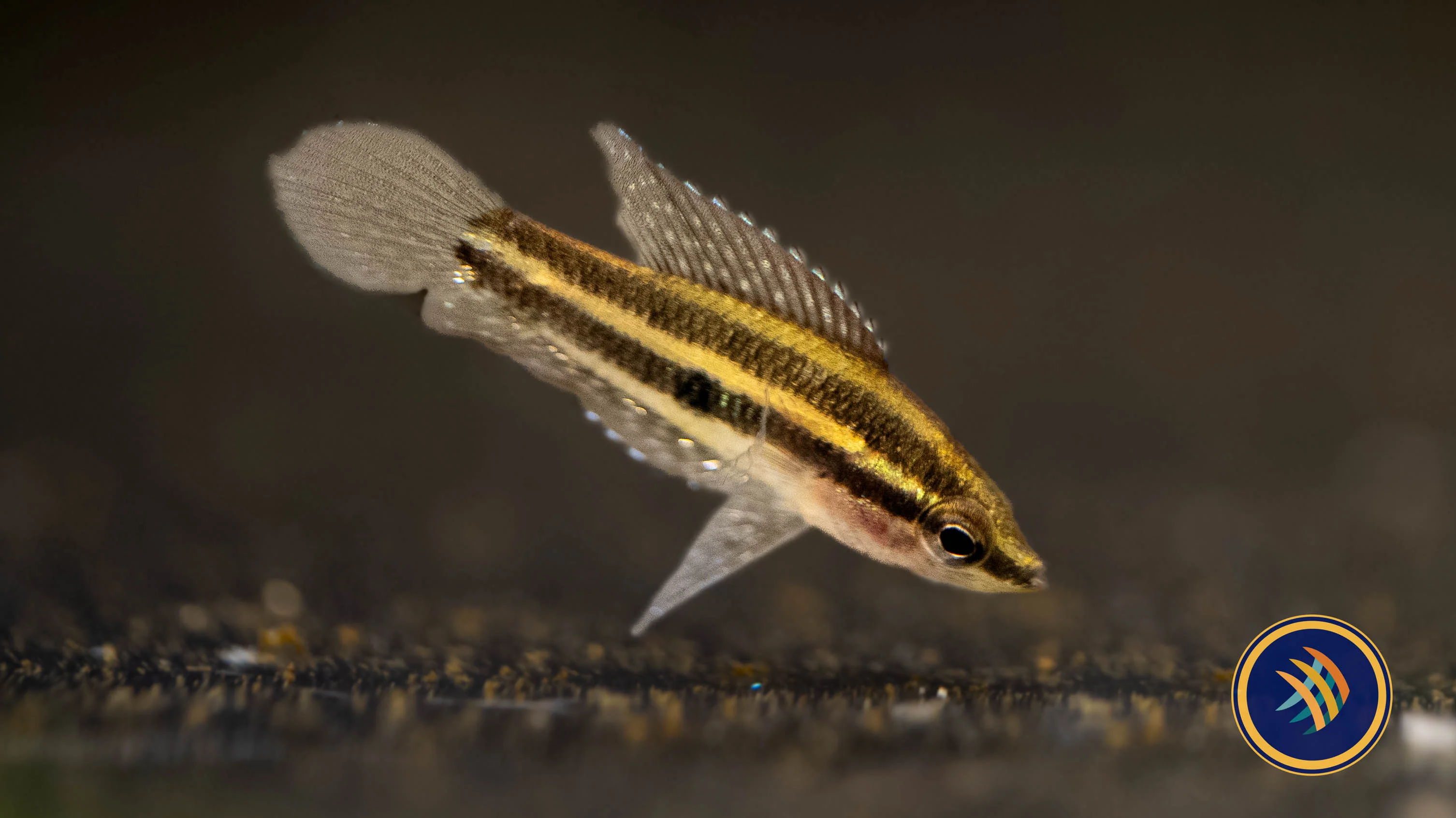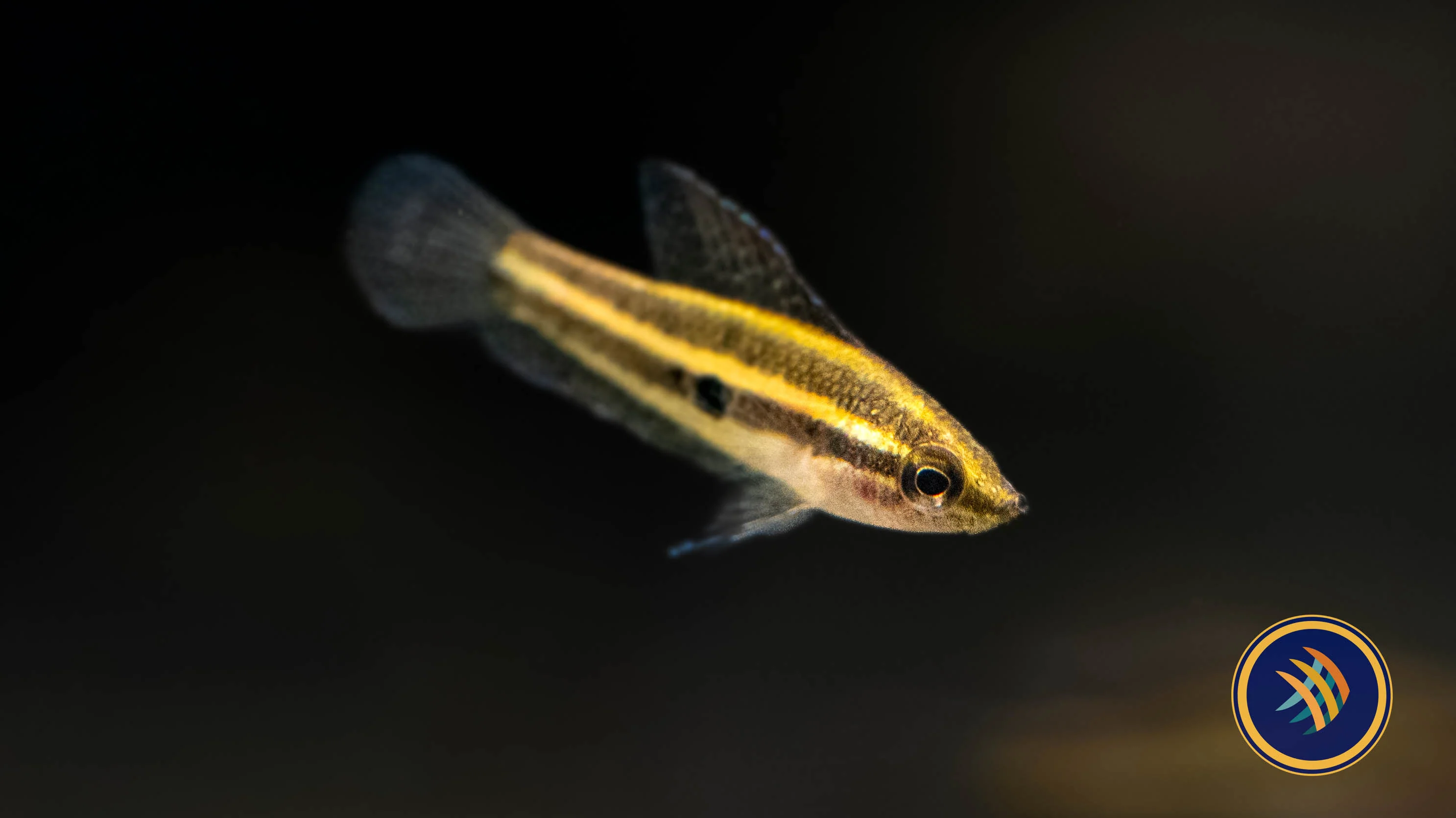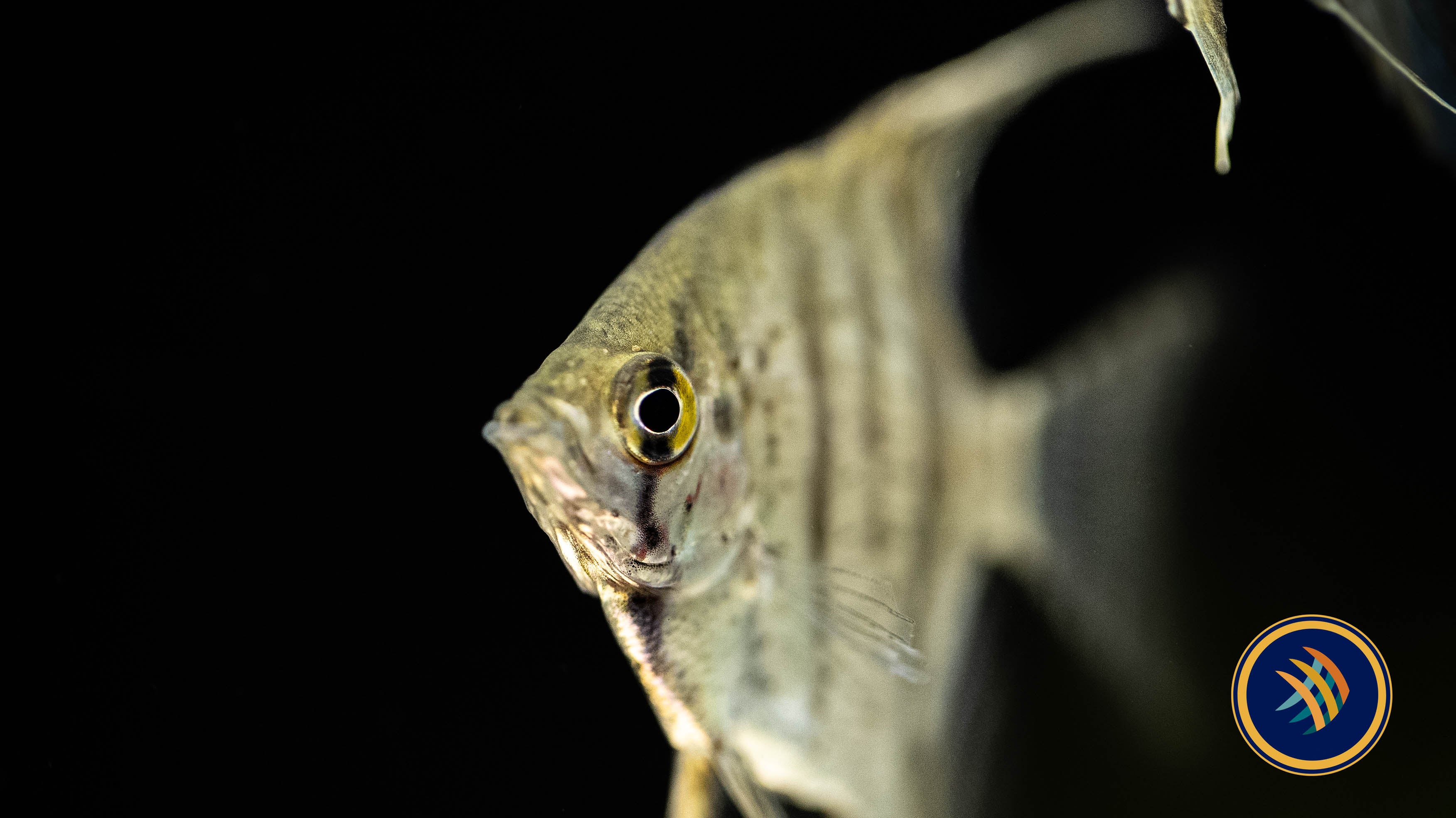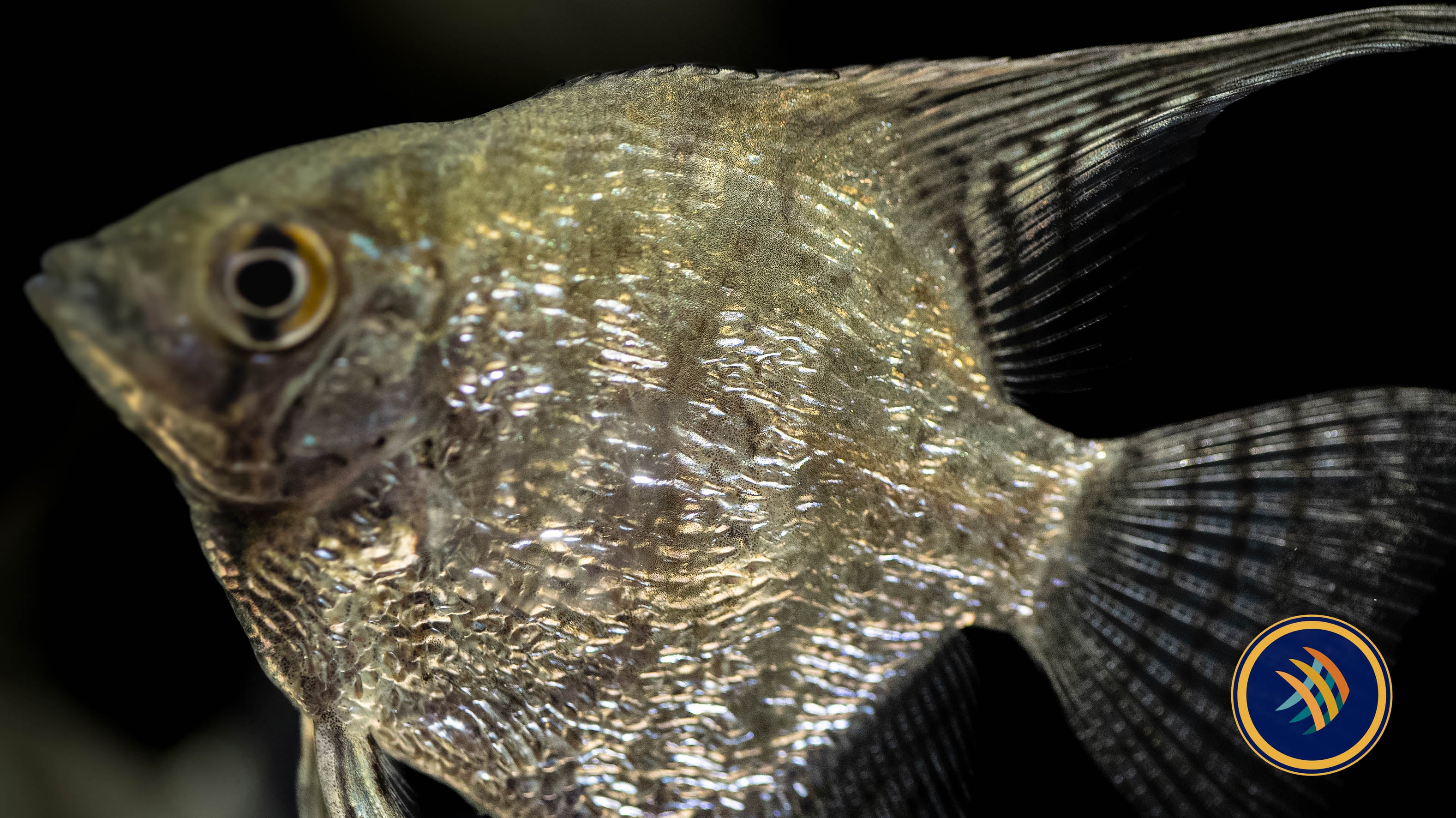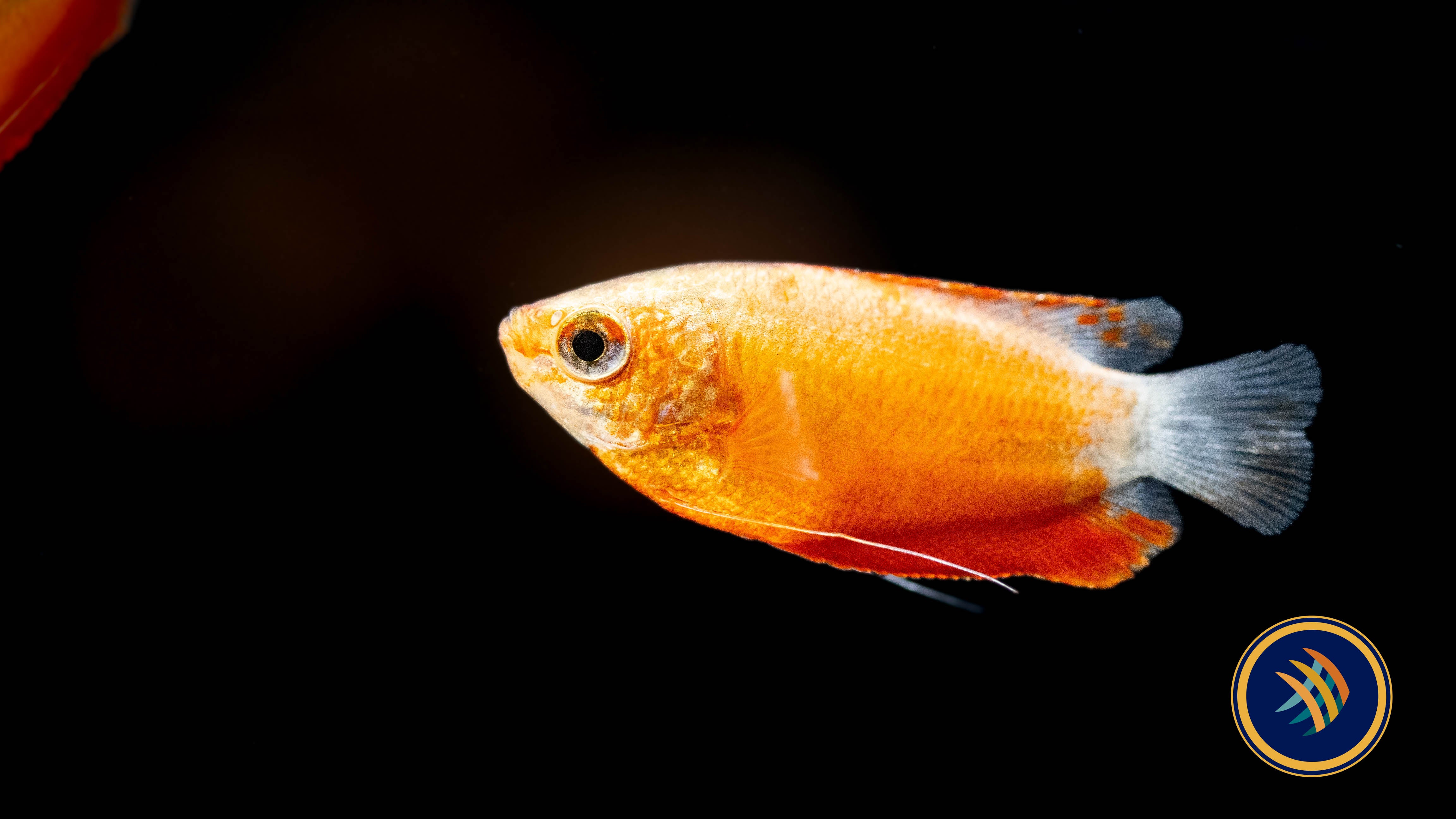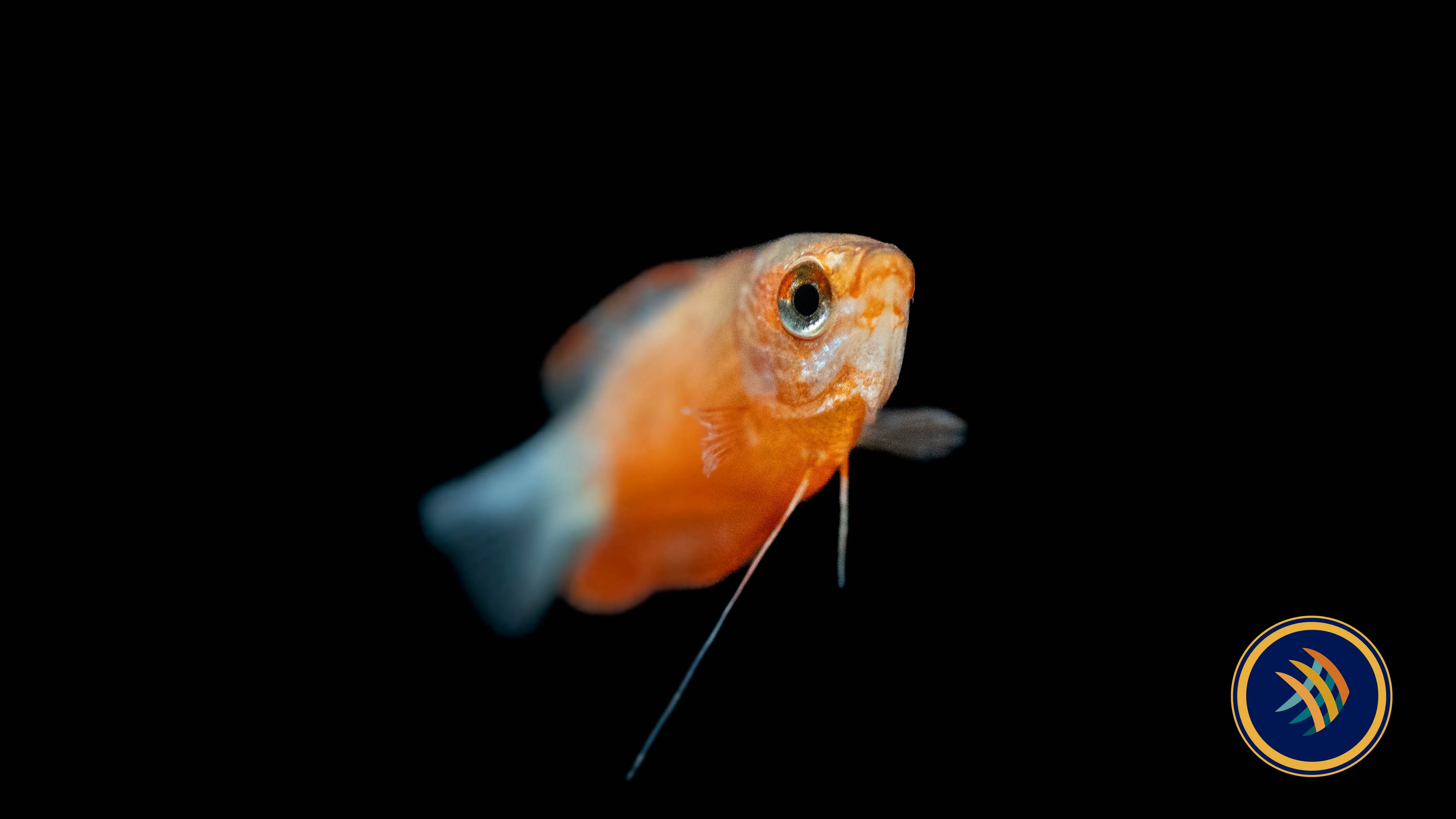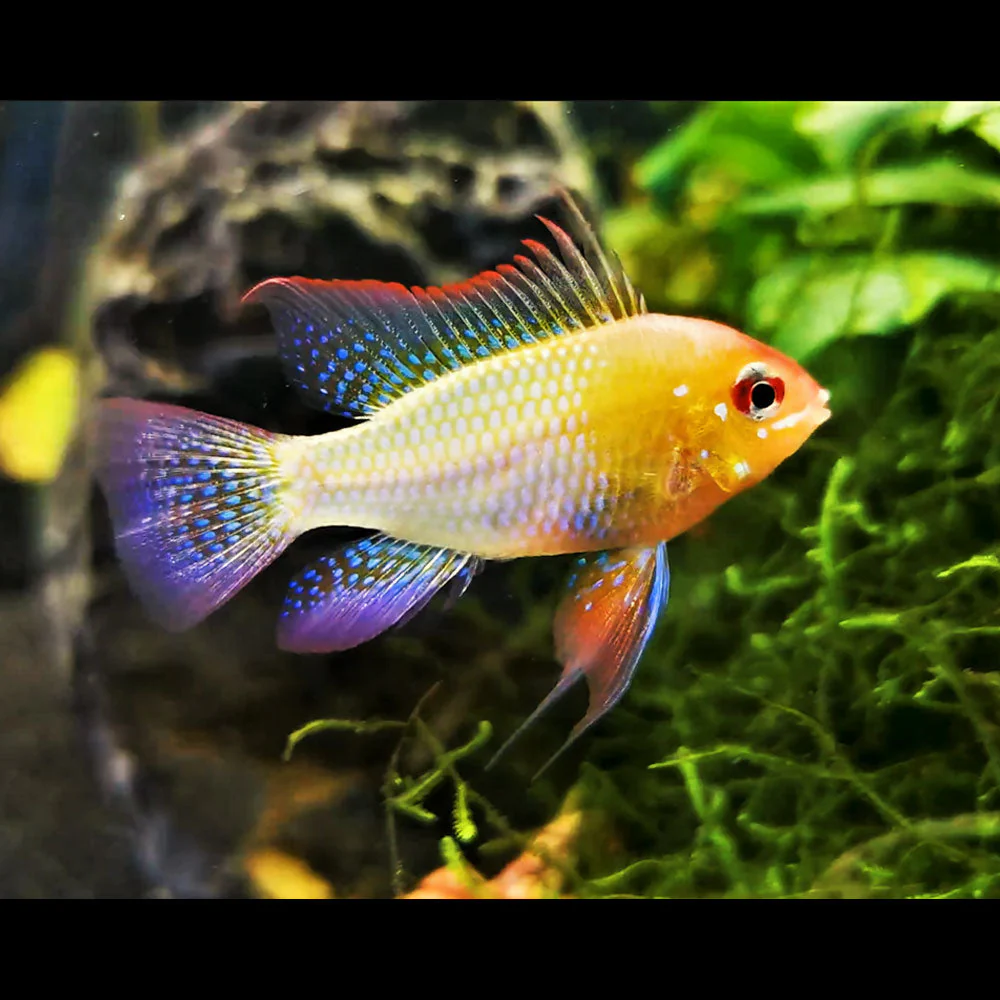


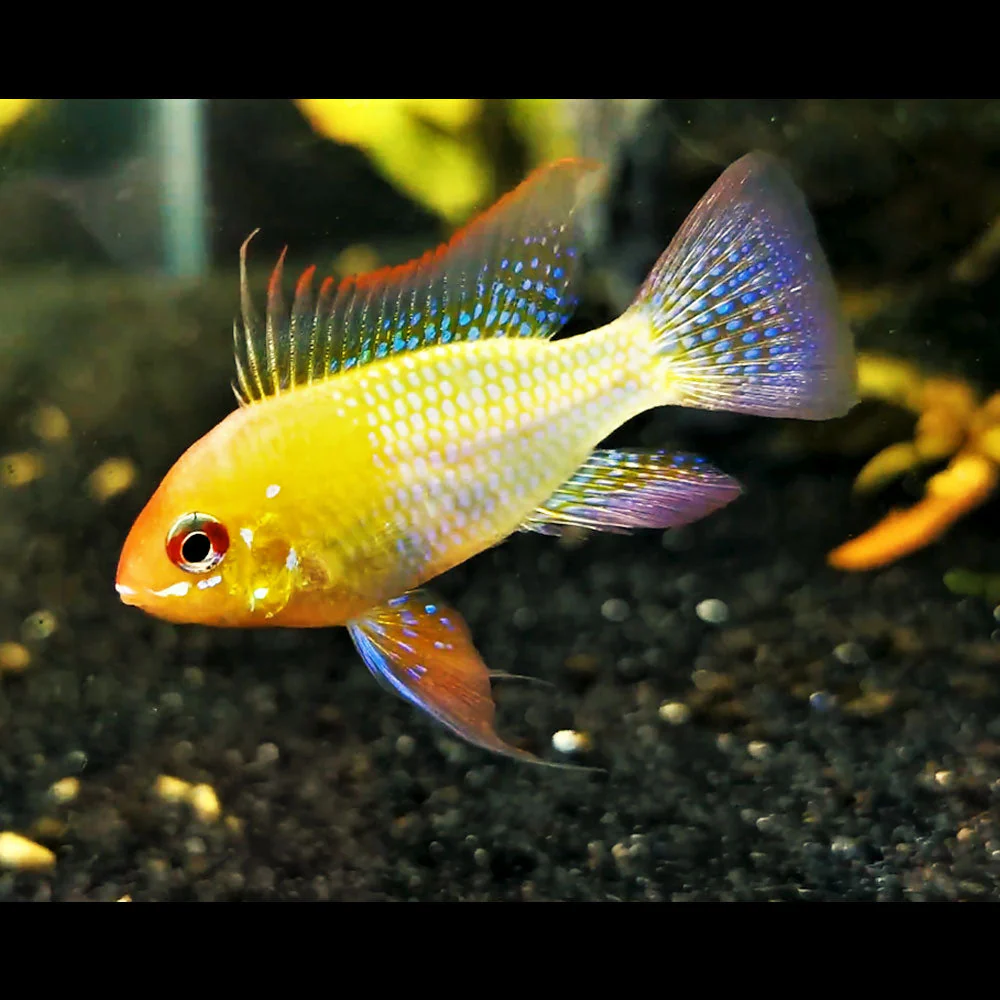
Gold Ram (Mikrogeophagus ramirezi)
Gold Ram
Scientific name: Mikrogeophagus ramirezi (gold color morph)
Other names: Golden Ram, Gold German Blue Ram
Quick Overview
- Family: Cichlidae
- Adult size: 5–7 cm (2–2.75 in)
- Lifespan: 2–4 years (often shorter with poor water quality)
- Temperament: Peaceful but territorial when breeding
- Difficulty: Moderate (water quality sensitive)
What Is a Gold Ram?
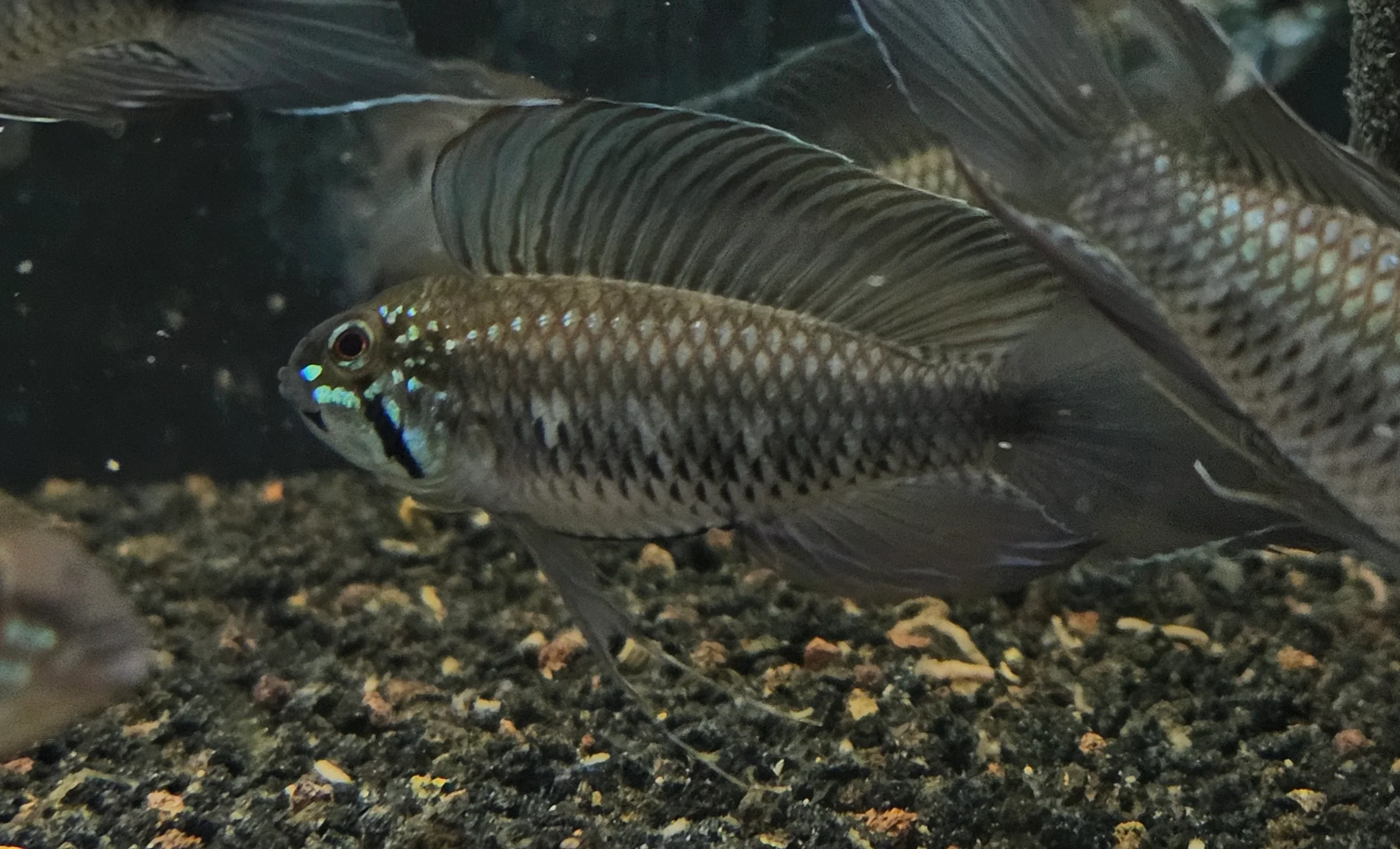
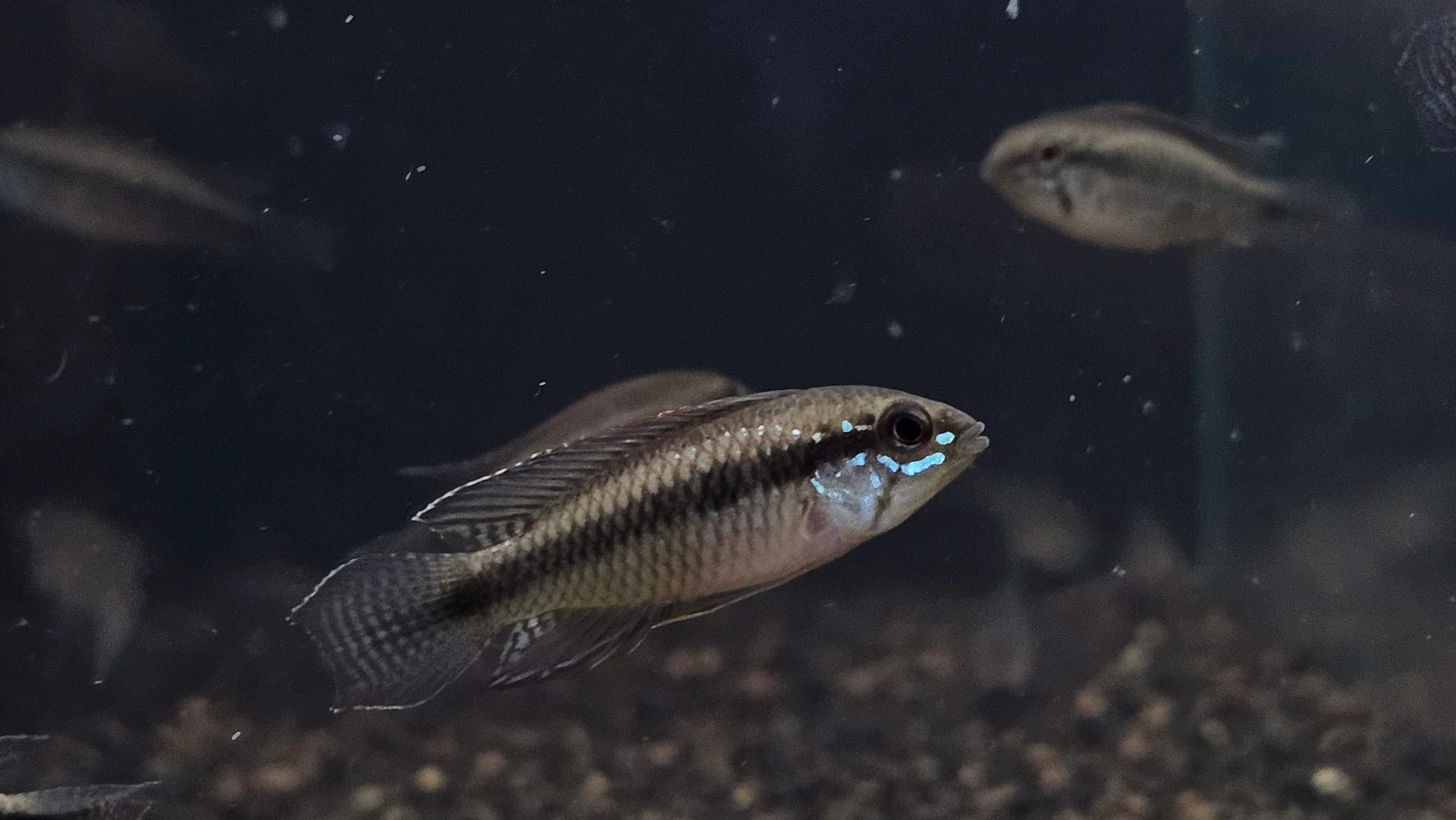
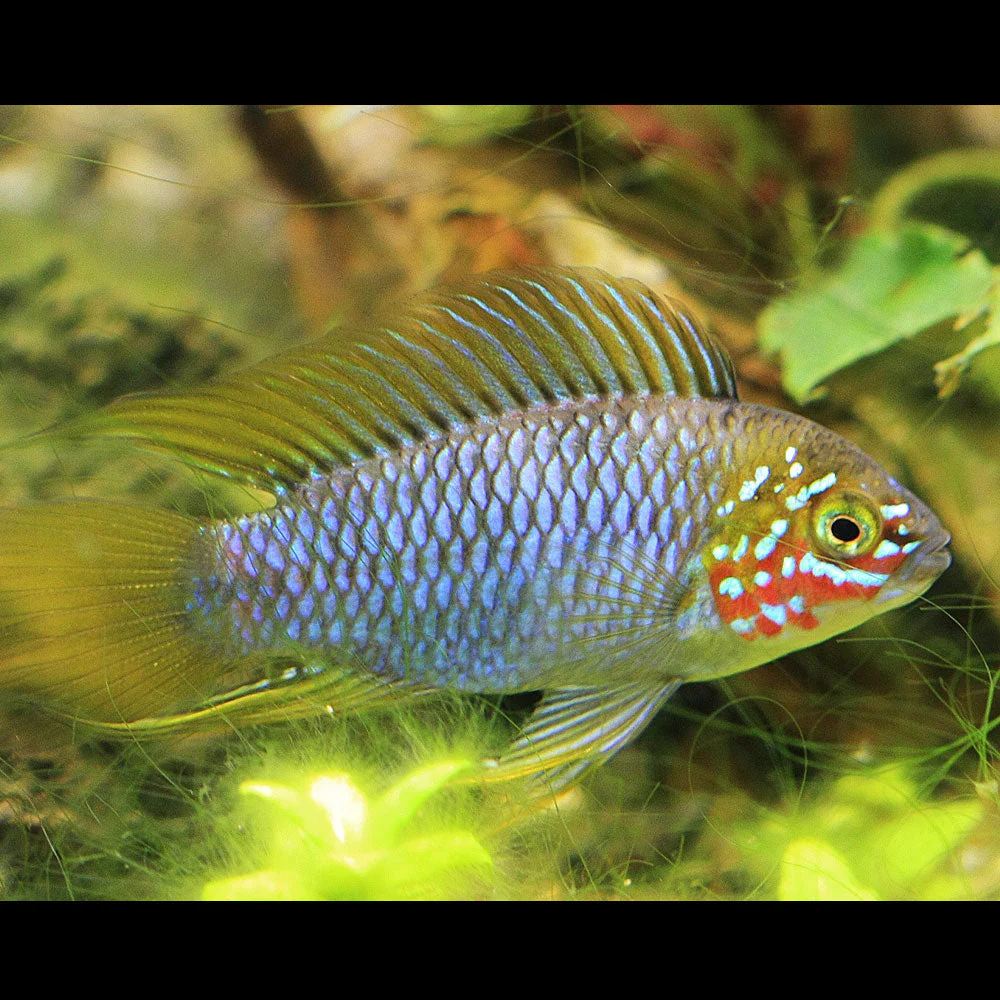
The Gold Ram is a selectively bred color morph of the German Blue Ram. Through line breeding, the blue pigmentation is reduced, resulting in a gold/yellow body, red eyes, and variable black markings. Care requirements are identical to standard rams, and they are not albino despite the lighter coloration.
Appearance & Identification
- Golden yellow to cream body with subtle iridescence
- Red or pink eyes
- Dark central body spot (may be faint or absent in some specimens)
- Long dorsal fin rays in males
- Males: slimmer, extended dorsal rays
- Females: shorter fins, often a pinkish belly when mature
Natural Origin (Species Background)
- Wild form native to the Orinoco River basin (Venezuela, Colombia)
- Naturally inhabits:
- Warm, slow-moving waters
- Sandy bottoms
- Soft, acidic conditions
- Captive strains are far less tolerant of poor conditions than wild fish
Aquarium Care
Tank Size & Setup
- Minimum tank: 20 gallons (30+ ideal for pairs or community tanks)
- Best environment includes:
- Fine sand substrate
- Smooth stones
- Driftwood
- Dense plants with open foreground
- Calm flow (avoid strong current)
Rams spend much of their time near the bottom and mid-water.
Water Parameters (Critical)
Gold Rams are very sensitive, especially store-bought imports.
- Temperature: 27–30 °C (80–86 °F) ✅ most important factor
- pH: 5.5–7.0 (stable is more important than exact number)
- Hardness: 1–6 dGH (soft water strongly preferred)
- Ammonia/Nitrite: 0
- Nitrate: <10 ppm ideal
⚠️ Cooler water or unstable parameters often cause:
- Loss of color
- Weak immune response
- Early death (the #1 cause of failure with rams)
Behavior & Compatibility
- Generally peaceful
- Males become territorial during breeding
- Can be kept:
- Singly
- As a bonded pair
- In small harems (1 male, 2 females in larger tanks)
Good Tankmates
- Small tetras (cardinal, rummynose)
- Corydoras (heat‑tolerant species)
- Otocinclus
- Pencilfish
- Peaceful dwarf cichlids (space permitting)
Avoid
- Fin nippers
- Aggressive cichlids
- Cool‑water species
- Boisterous bottom dwellers
Diet
Omnivorous but prefers protein-rich food.
Staple diet:
- High-quality micro pellets or fine flakes
Enhancements:
- Frozen: bloodworms, brine shrimp, mysis
- Live foods greatly improve color and breeding condition
Feed 1–2× daily in small amounts.
Breeding Notes
- Open substrate spawners
- Lay eggs on flat stones or leaves
- Parents may guard eggs—but domestic strains often abandon or eat eggs
- Fry require:
- Very clean water
- Infusoria or powdered fry foods initially
Breeding success is higher with locally bred stock rather than imports.
Common Issues (Very Important)
- Sudden deaths after purchase → usually temperature or water mismatch
- Thin, sunken bellies → internal parasites
- Clamped fins, lethargy → stress from poor water or low heat
Slow acclimation and high temperature dramatically increase success.
Product Information
Product Information
Shipping & Returns
Shipping & Returns
Description
Gold Ram
Scientific name: Mikrogeophagus ramirezi (gold color morph)
Other names: Golden Ram, Gold German Blue Ram
Quick Overview
- Family: Cichlidae
- Adult size: 5–7 cm (2–2.75 in)
- Lifespan: 2–4 years (often shorter with poor water quality)
- Temperament: Peaceful but territorial when breeding
- Difficulty: Moderate (water quality sensitive)
What Is a Gold Ram?
The Gold Ram is a selectively bred color morph of the German Blue Ram. Through line breeding, the blue pigmentation is reduced, resulting in a gold/yellow body, red eyes, and variable black markings. Care requirements are identical to standard rams, and they are not albino despite the lighter coloration.
Appearance & Identification
- Golden yellow to cream body with subtle iridescence
- Red or pink eyes
- Dark central body spot (may be faint or absent in some specimens)
- Long dorsal fin rays in males
- Males: slimmer, extended dorsal rays
- Females: shorter fins, often a pinkish belly when mature
Natural Origin (Species Background)
- Wild form native to the Orinoco River basin (Venezuela, Colombia)
- Naturally inhabits:
- Warm, slow-moving waters
- Sandy bottoms
- Soft, acidic conditions
- Captive strains are far less tolerant of poor conditions than wild fish
Aquarium Care
Tank Size & Setup
- Minimum tank: 20 gallons (30+ ideal for pairs or community tanks)
- Best environment includes:
- Fine sand substrate
- Smooth stones
- Driftwood
- Dense plants with open foreground
- Calm flow (avoid strong current)
Rams spend much of their time near the bottom and mid-water.
Water Parameters (Critical)
Gold Rams are very sensitive, especially store-bought imports.
- Temperature: 27–30 °C (80–86 °F) ✅ most important factor
- pH: 5.5–7.0 (stable is more important than exact number)
- Hardness: 1–6 dGH (soft water strongly preferred)
- Ammonia/Nitrite: 0
- Nitrate: <10 ppm ideal
⚠️ Cooler water or unstable parameters often cause:
- Loss of color
- Weak immune response
- Early death (the #1 cause of failure with rams)
Behavior & Compatibility
- Generally peaceful
- Males become territorial during breeding
- Can be kept:
- Singly
- As a bonded pair
- In small harems (1 male, 2 females in larger tanks)
Good Tankmates
- Small tetras (cardinal, rummynose)
- Corydoras (heat‑tolerant species)
- Otocinclus
- Pencilfish
- Peaceful dwarf cichlids (space permitting)
Avoid
- Fin nippers
- Aggressive cichlids
- Cool‑water species
- Boisterous bottom dwellers
Diet
Omnivorous but prefers protein-rich food.
Staple diet:
- High-quality micro pellets or fine flakes
Enhancements:
- Frozen: bloodworms, brine shrimp, mysis
- Live foods greatly improve color and breeding condition
Feed 1–2× daily in small amounts.
Breeding Notes
- Open substrate spawners
- Lay eggs on flat stones or leaves
- Parents may guard eggs—but domestic strains often abandon or eat eggs
- Fry require:
- Very clean water
- Infusoria or powdered fry foods initially
Breeding success is higher with locally bred stock rather than imports.
Common Issues (Very Important)
- Sudden deaths after purchase → usually temperature or water mismatch
- Thin, sunken bellies → internal parasites
- Clamped fins, lethargy → stress from poor water or low heat
Slow acclimation and high temperature dramatically increase success.