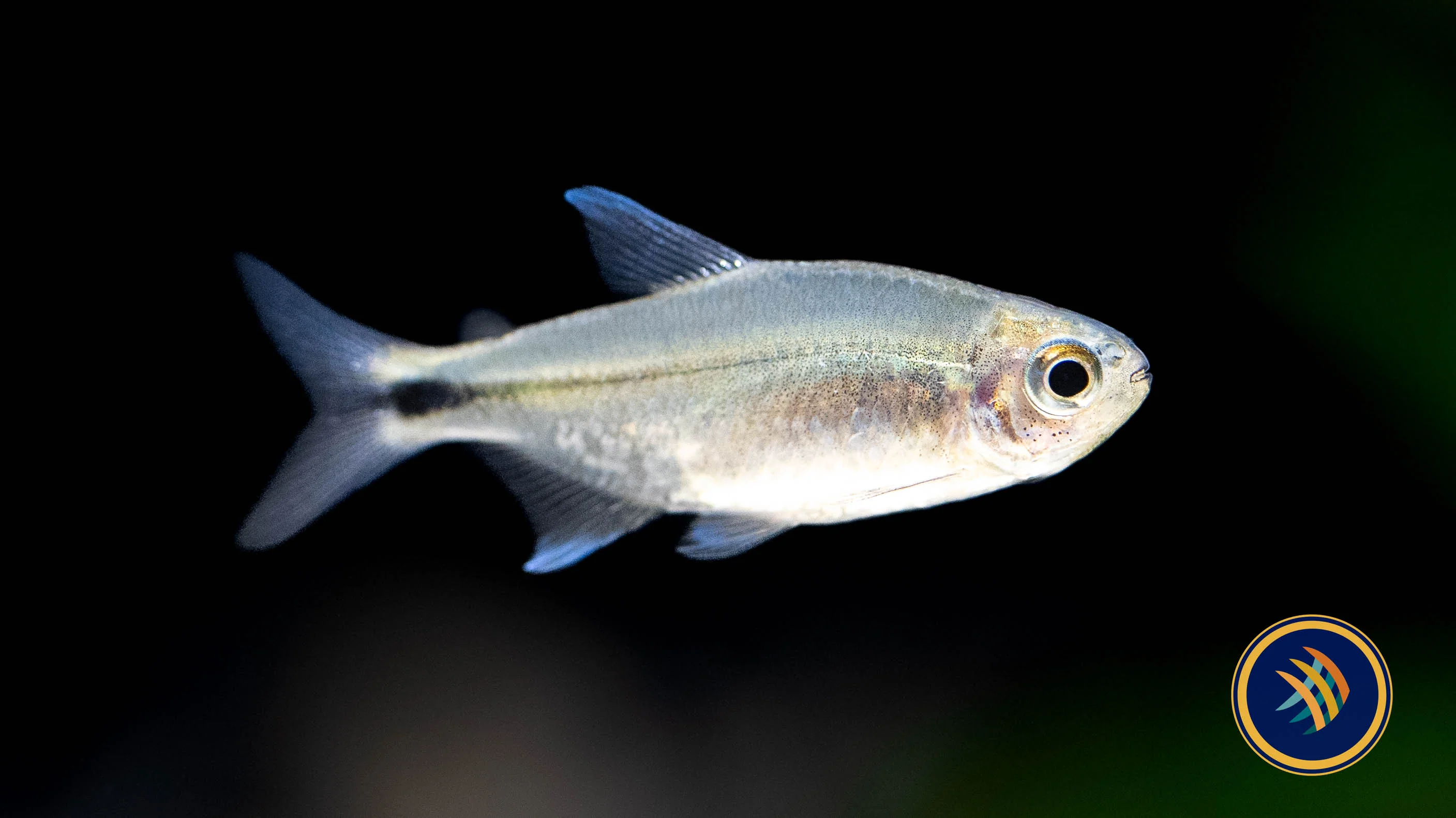
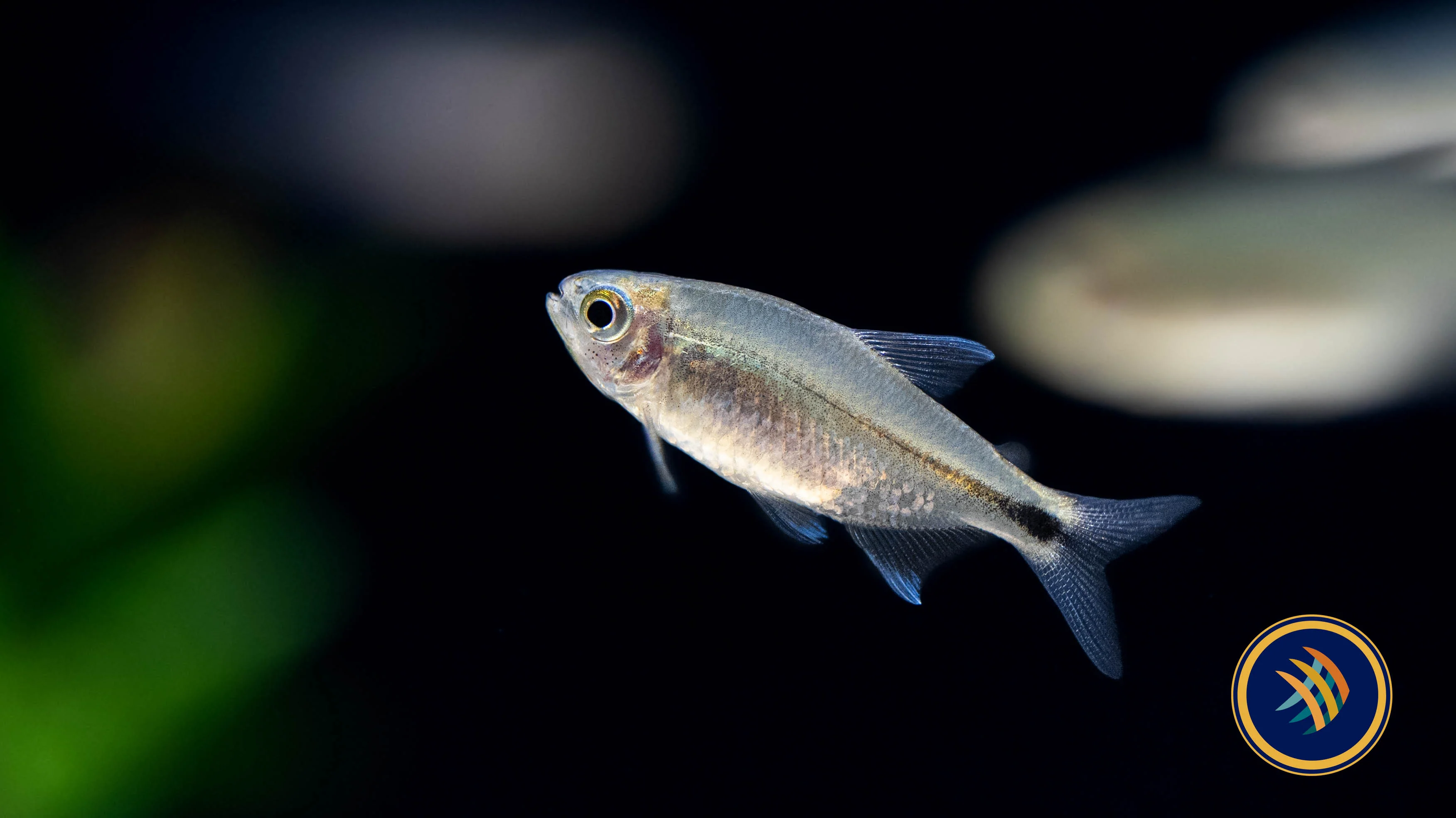
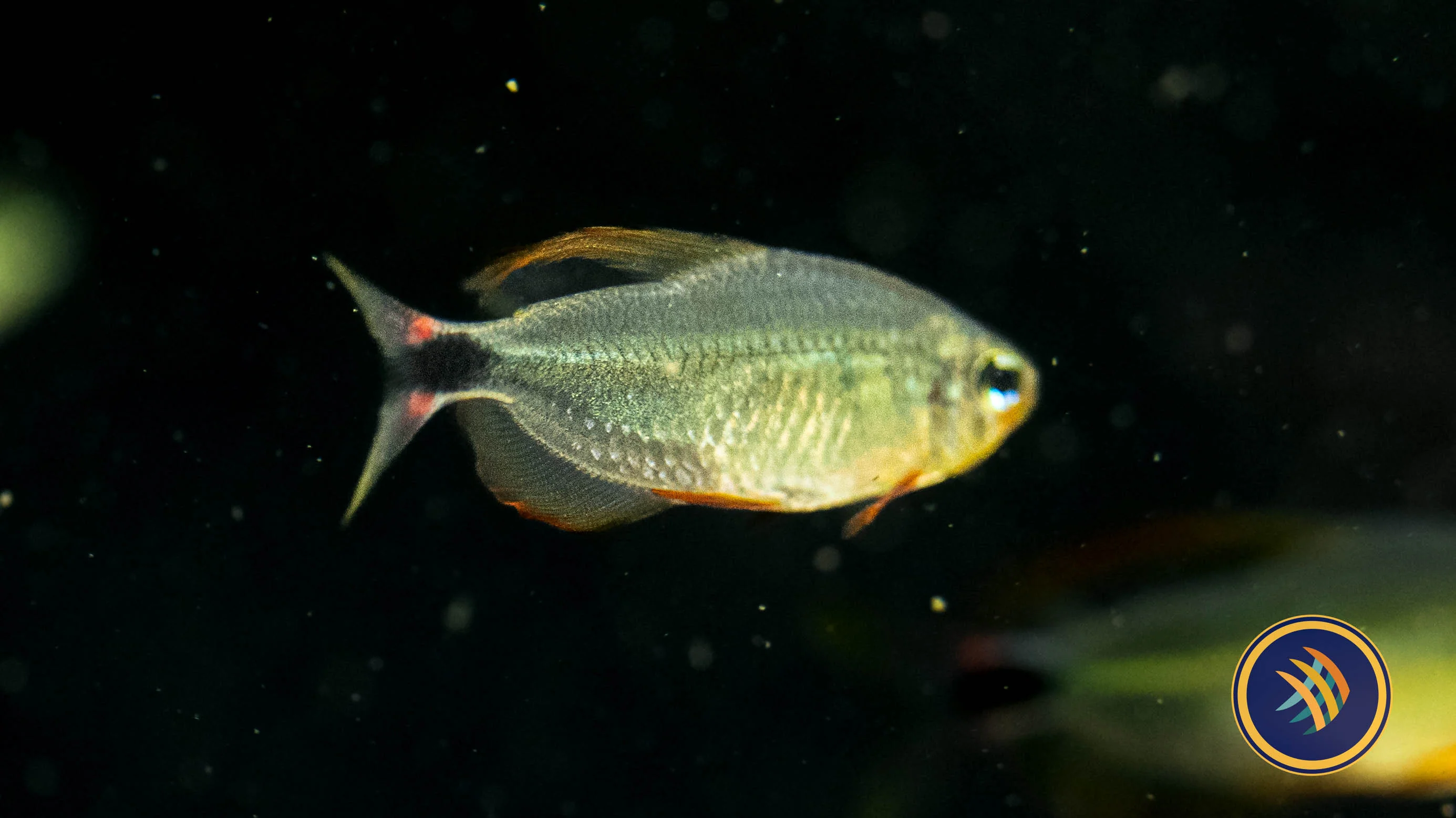
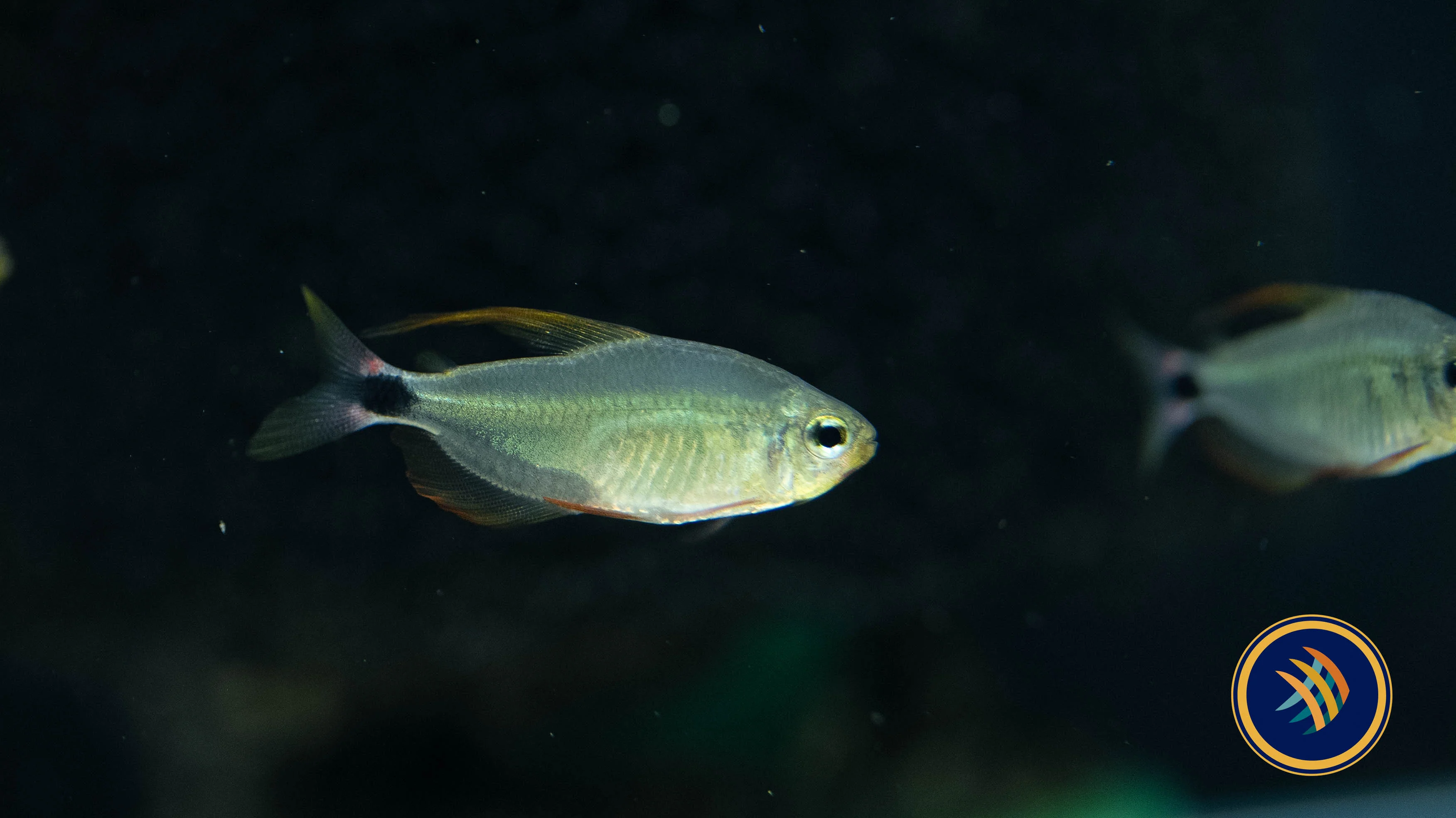
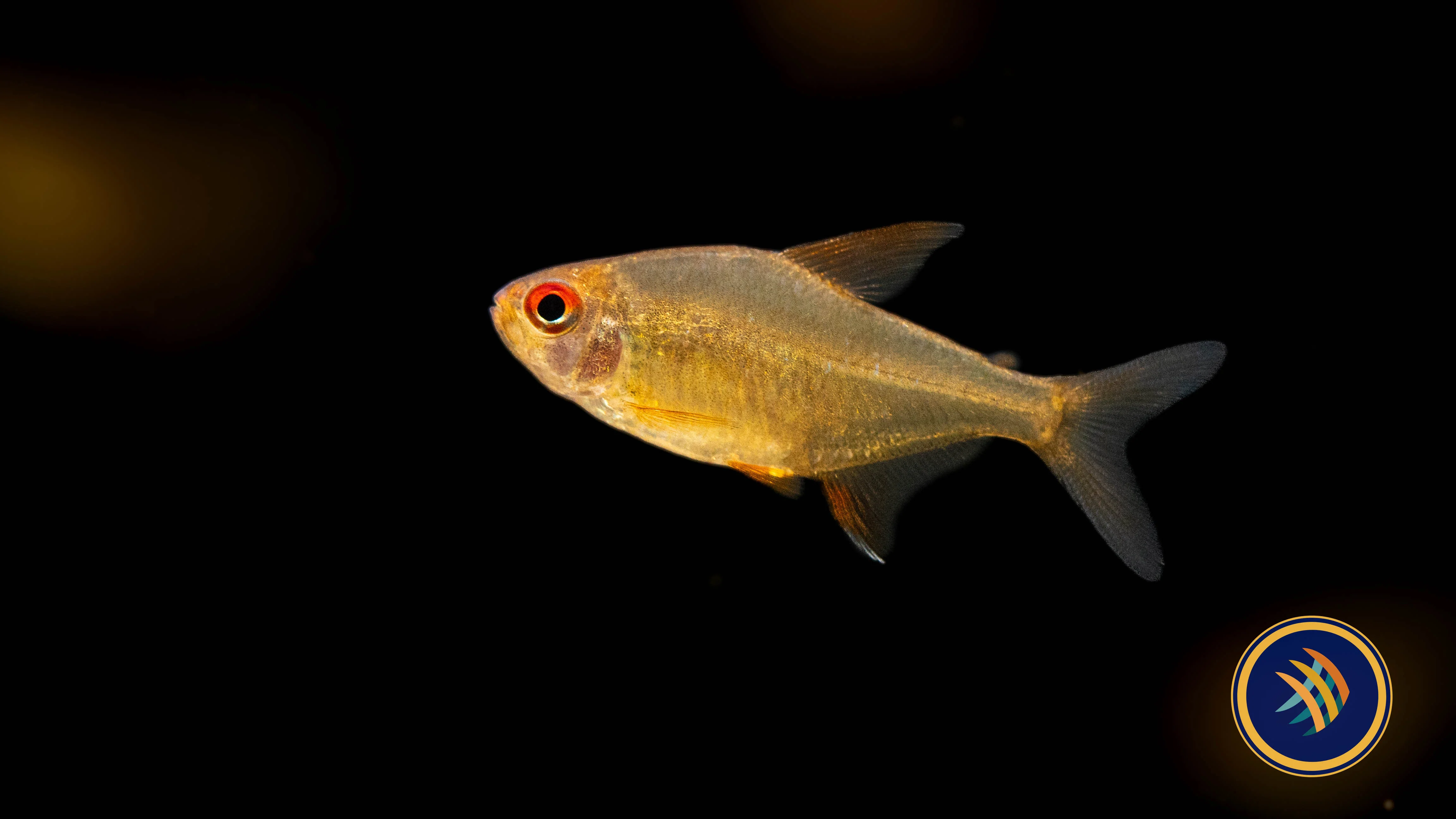
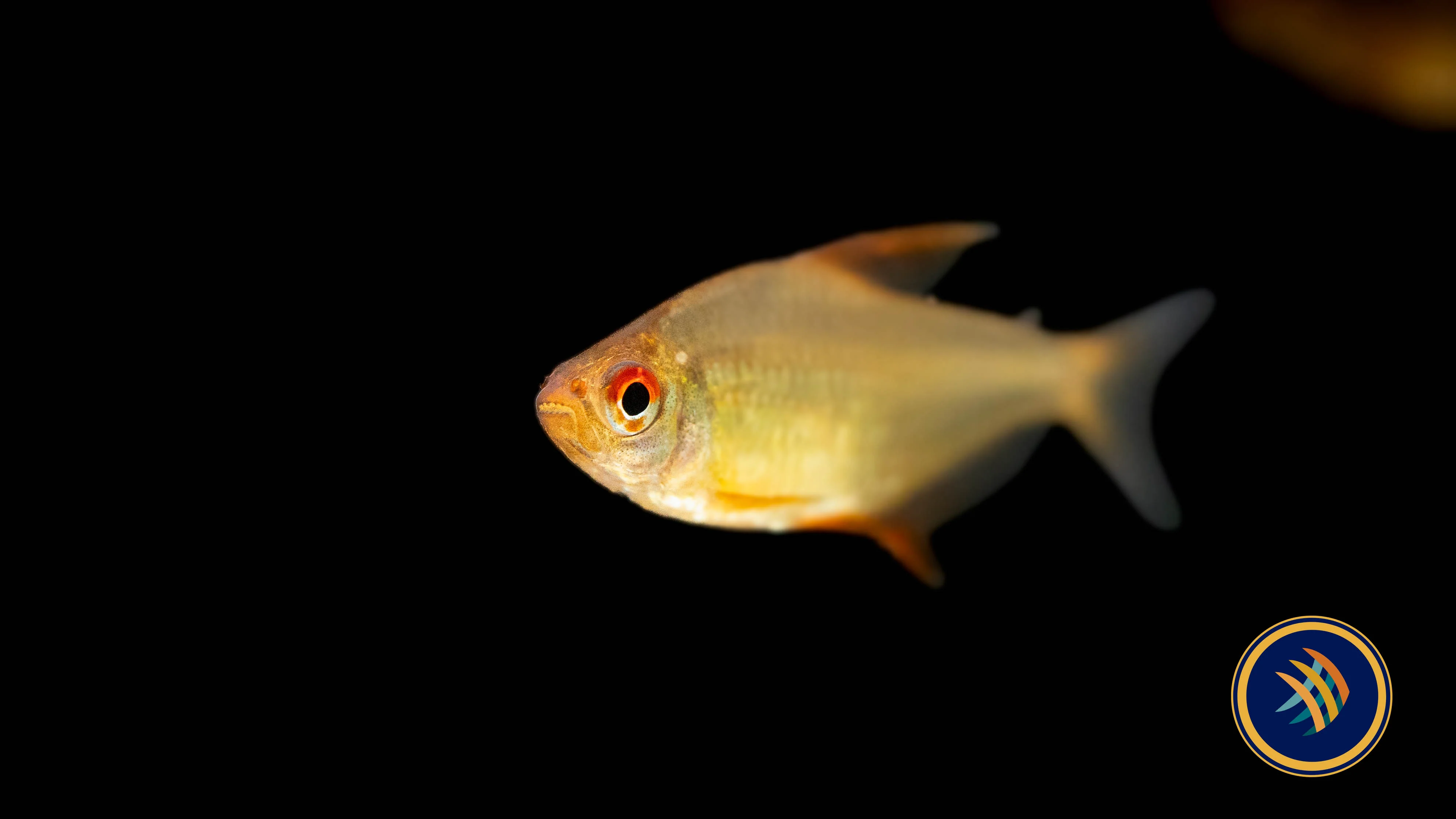
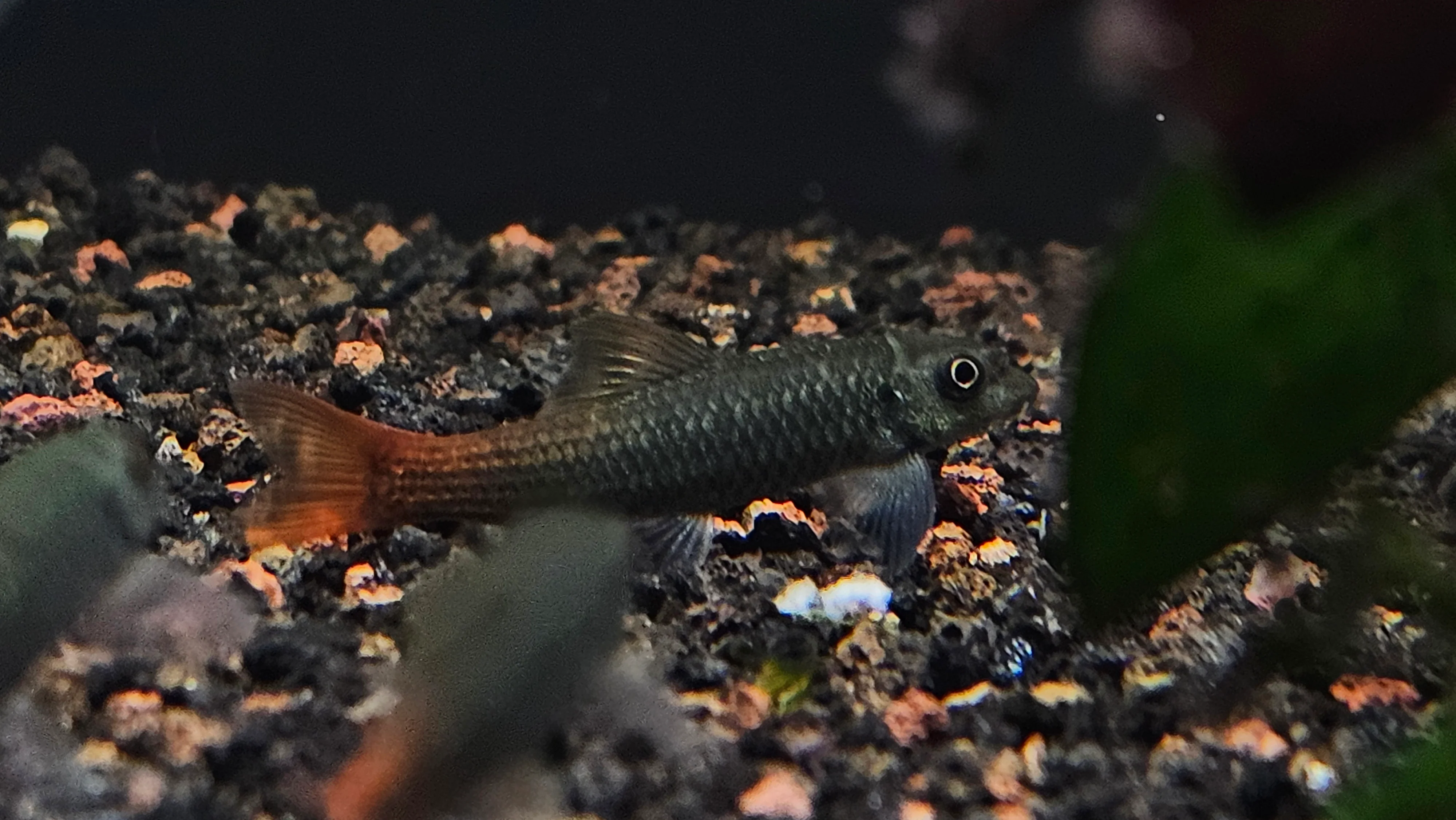
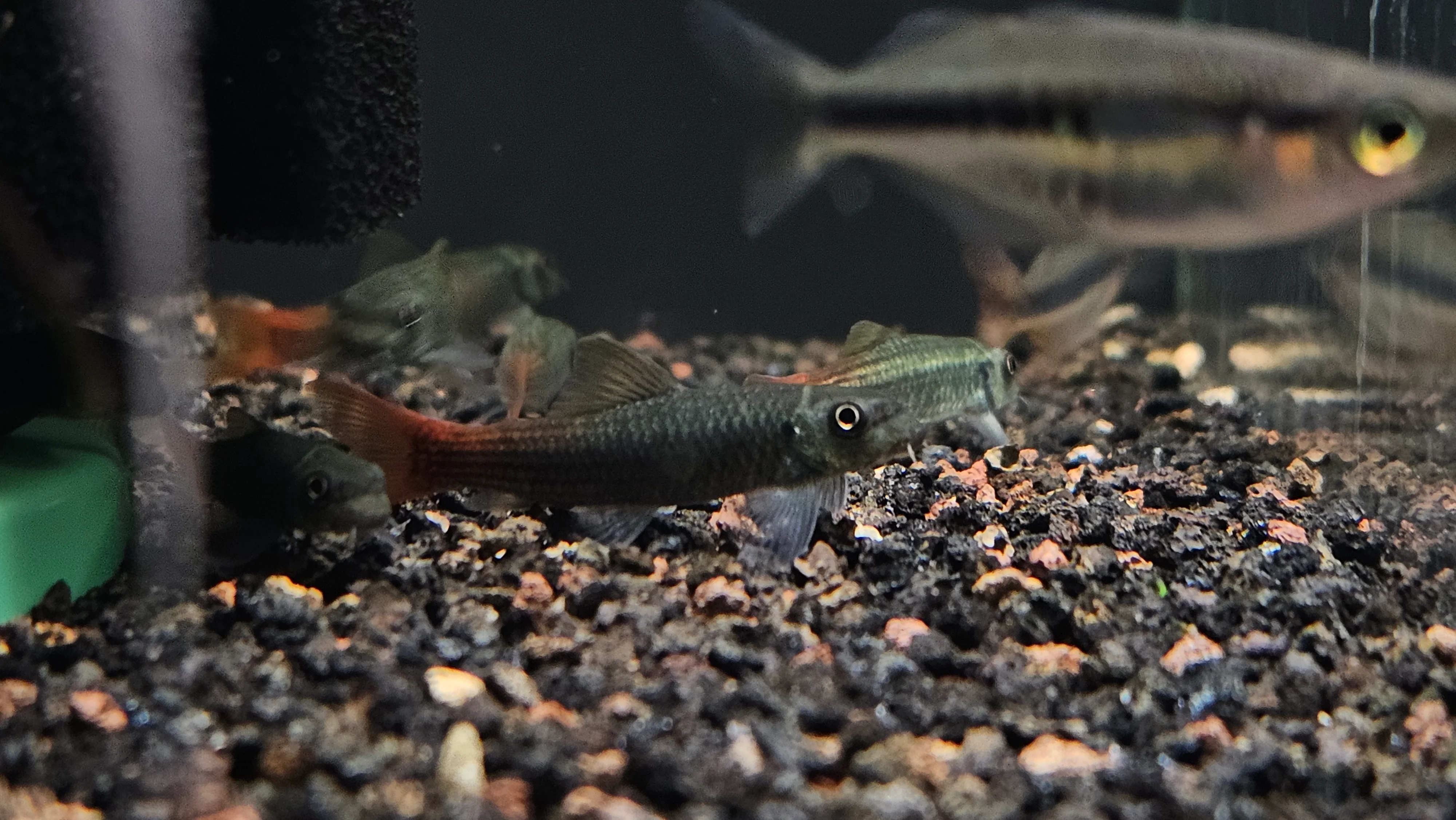
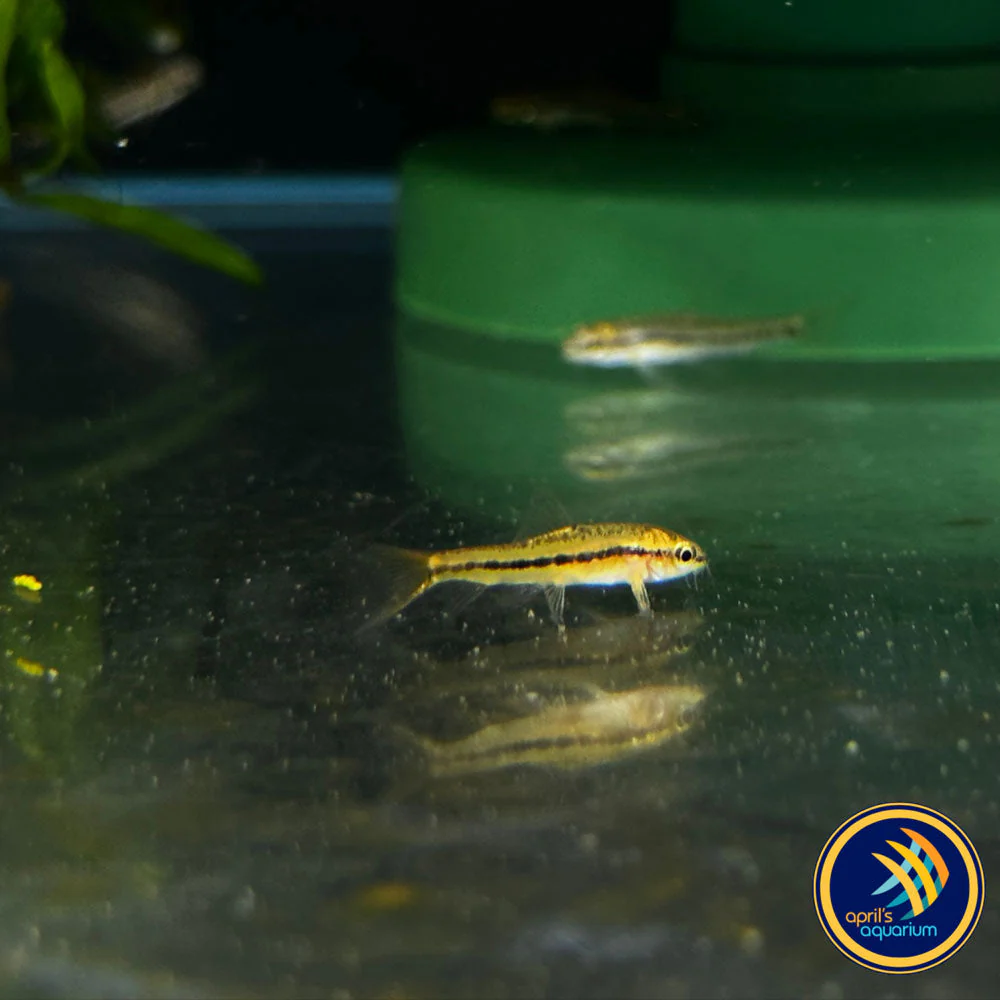
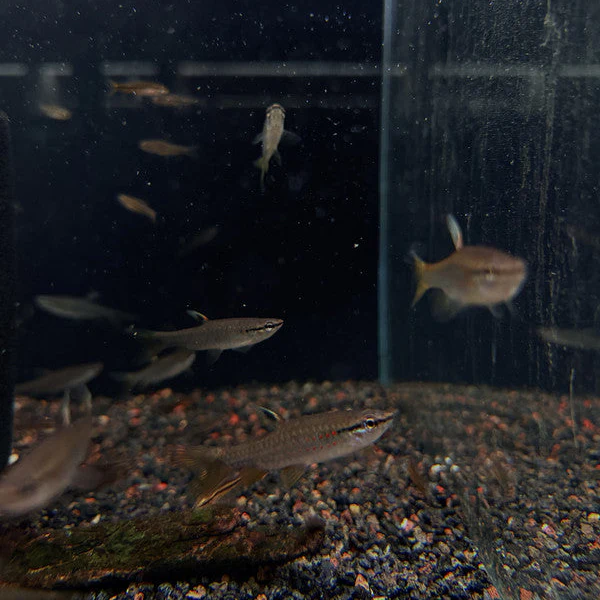
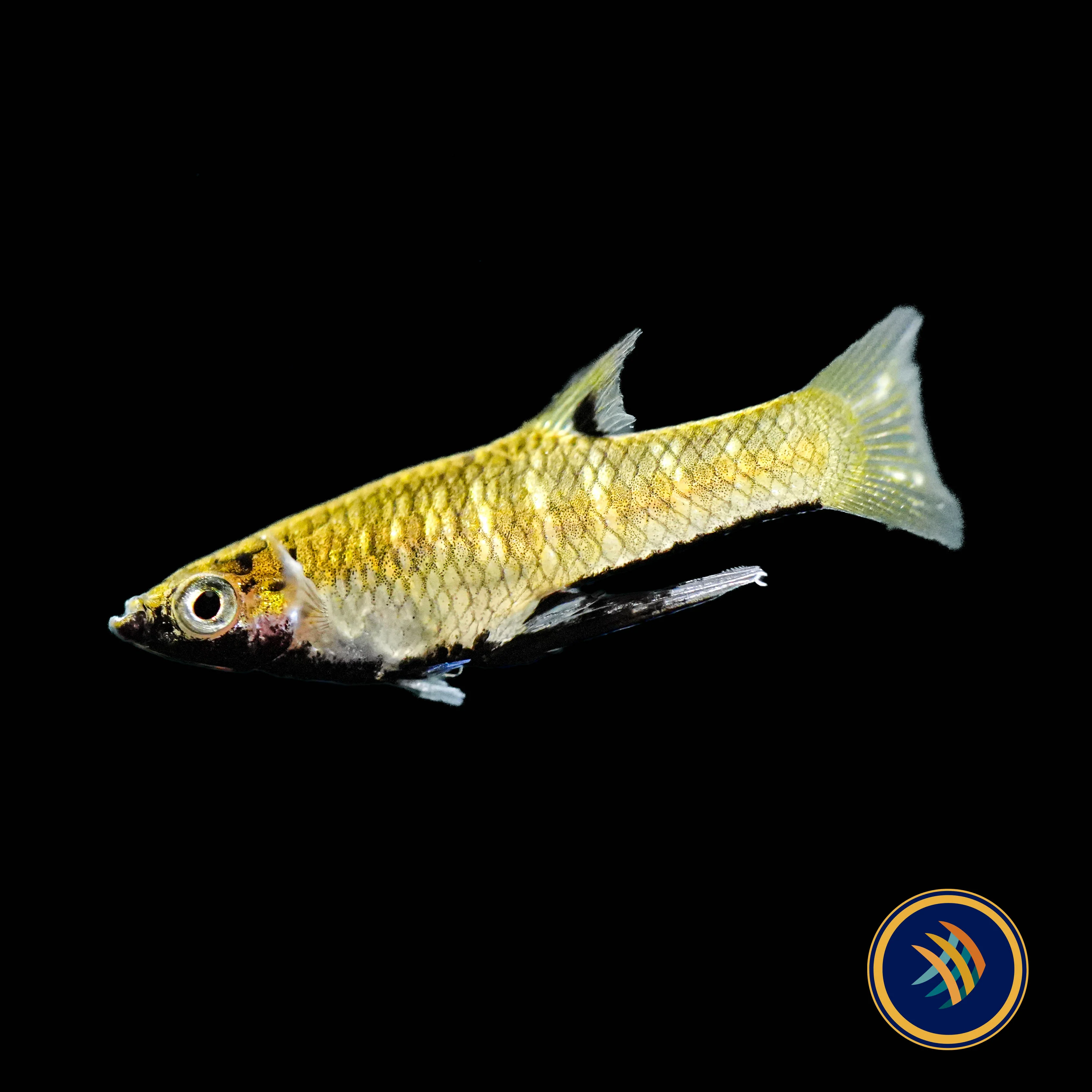
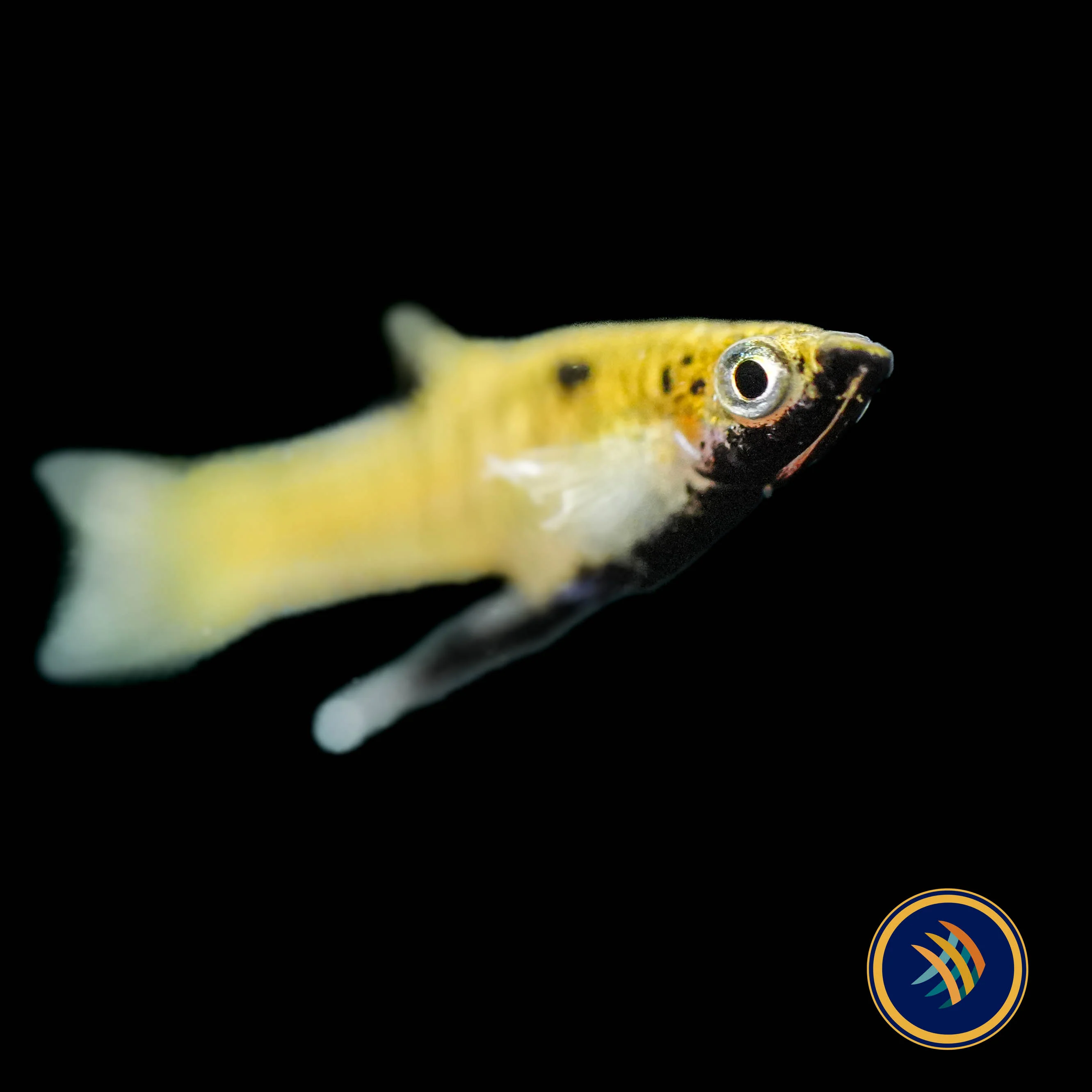
Half Banded Spiny Eel (Mastacembelus circumcinctus) 11cm+ (Aquarium Glaser)
Mastacembelus circumcinctus
Common names: Circled Spiny Eel, Banded Spiny Eel
Family: Mastacembelidae
Origin: Southeast Asia (Thailand, Cambodia, Laos; Mekong basin)
Natural Habitat
- Slow‑moving rivers, floodplains, canals, and backwaters
- Muddy or sandy substrates
- Dense plant growth, roots, and submerged debris
- Often burrows during daylight hours
This species is benthic and crepuscular/nocturnal, relying heavily on cover and substrate.
Adult Size
- 30–40 cm (12–16 inches)
- Some individuals may exceed this in spacious aquariums
Despite being sold small, this is not a nano or community eel.
Temperament & Behavior
- Generally peaceful, but predatory
- Will eat:
- Small fish
- Shrimp
- Snails
- Can be territorial toward other spiny eels, especially in confined spaces
Best kept:
- Singly
- Or in very large systems with visual barriers if mixing eels
Aquarium Requirements
Tank Size
- Minimum: 75 gallons
- Recommended: 125+ gallons for long‑term care
Water Parameters
- Temperature: 24–28 °C (75–82 °F)
- pH: 6.0–7.5
- Hardness: Soft to moderately hard (3–12 dGH)
- Excellent oxygenation and stable water quality required
Filtration
- Strong biological filtration
- Moderate flow with calmer zones
- Absolutely no sharp intake grates
Substrate & Aquascape (Critical)
-
Fine sand substrate only
- Gravel can cause skin abrasions and infections
- Driftwood, roots, rocks with caves
- Dense plants (real or artificial)
- Leaf litter beneficial
- Tight‑fitting lid mandatory (escape artist)
Diet
Carnivorous
Preferred foods
- Live or frozen:
- Bloodworms
- Blackworms
- Earthworms (chopped)
- Prawn / shrimp
- Mussel
- Some individuals accept sinking carnivore pellets after acclimation
Newly imported specimens often refuse dry food initially.
Sexual Dimorphism
- Minimal and unreliable
- Females may be slightly thicker‑bodied when mature
- Sexing is difficult without breeding behavior
Breeding
- Extremely rare in aquariums
- No documented consistent captive breeding method
- Most specimens in the trade are wild‑caught
Tankmates
Suitable Tankmates:
- Larger peaceful fish:
- Severums
- Silver dollars
- Peaceful large barbs
- Larger loaches
- Non‑aggressive cichlids of suitable size
Avoid:
- Small fish
- Shrimp/crustaceans
- Fin‑nipping species
- Aggressive cichlids
- Sharp‑scaled or hyper‑active fish
Health & Care Notes
-
Scaleless → sensitive to medications
- Use reduced dosages
- Avoid copper whenever possible
- Susceptible to:
- Skin infections
- Parasites after import
- Quarantine strongly recommended
- Stress shows as refusal to eat or excessive hiding
Product Information
Product Information
Shipping & Returns
Shipping & Returns
Description
Mastacembelus circumcinctus
Common names: Circled Spiny Eel, Banded Spiny Eel
Family: Mastacembelidae
Origin: Southeast Asia (Thailand, Cambodia, Laos; Mekong basin)
Natural Habitat
- Slow‑moving rivers, floodplains, canals, and backwaters
- Muddy or sandy substrates
- Dense plant growth, roots, and submerged debris
- Often burrows during daylight hours
This species is benthic and crepuscular/nocturnal, relying heavily on cover and substrate.
Adult Size
- 30–40 cm (12–16 inches)
- Some individuals may exceed this in spacious aquariums
Despite being sold small, this is not a nano or community eel.
Temperament & Behavior
- Generally peaceful, but predatory
- Will eat:
- Small fish
- Shrimp
- Snails
- Can be territorial toward other spiny eels, especially in confined spaces
Best kept:
- Singly
- Or in very large systems with visual barriers if mixing eels
Aquarium Requirements
Tank Size
- Minimum: 75 gallons
- Recommended: 125+ gallons for long‑term care
Water Parameters
- Temperature: 24–28 °C (75–82 °F)
- pH: 6.0–7.5
- Hardness: Soft to moderately hard (3–12 dGH)
- Excellent oxygenation and stable water quality required
Filtration
- Strong biological filtration
- Moderate flow with calmer zones
- Absolutely no sharp intake grates
Substrate & Aquascape (Critical)
-
Fine sand substrate only
- Gravel can cause skin abrasions and infections
- Driftwood, roots, rocks with caves
- Dense plants (real or artificial)
- Leaf litter beneficial
- Tight‑fitting lid mandatory (escape artist)
Diet
Carnivorous
Preferred foods
- Live or frozen:
- Bloodworms
- Blackworms
- Earthworms (chopped)
- Prawn / shrimp
- Mussel
- Some individuals accept sinking carnivore pellets after acclimation
Newly imported specimens often refuse dry food initially.
Sexual Dimorphism
- Minimal and unreliable
- Females may be slightly thicker‑bodied when mature
- Sexing is difficult without breeding behavior
Breeding
- Extremely rare in aquariums
- No documented consistent captive breeding method
- Most specimens in the trade are wild‑caught
Tankmates
Suitable Tankmates:
- Larger peaceful fish:
- Severums
- Silver dollars
- Peaceful large barbs
- Larger loaches
- Non‑aggressive cichlids of suitable size
Avoid:
- Small fish
- Shrimp/crustaceans
- Fin‑nipping species
- Aggressive cichlids
- Sharp‑scaled or hyper‑active fish
Health & Care Notes
-
Scaleless → sensitive to medications
- Use reduced dosages
- Avoid copper whenever possible
- Susceptible to:
- Skin infections
- Parasites after import
- Quarantine strongly recommended
- Stress shows as refusal to eat or excessive hiding